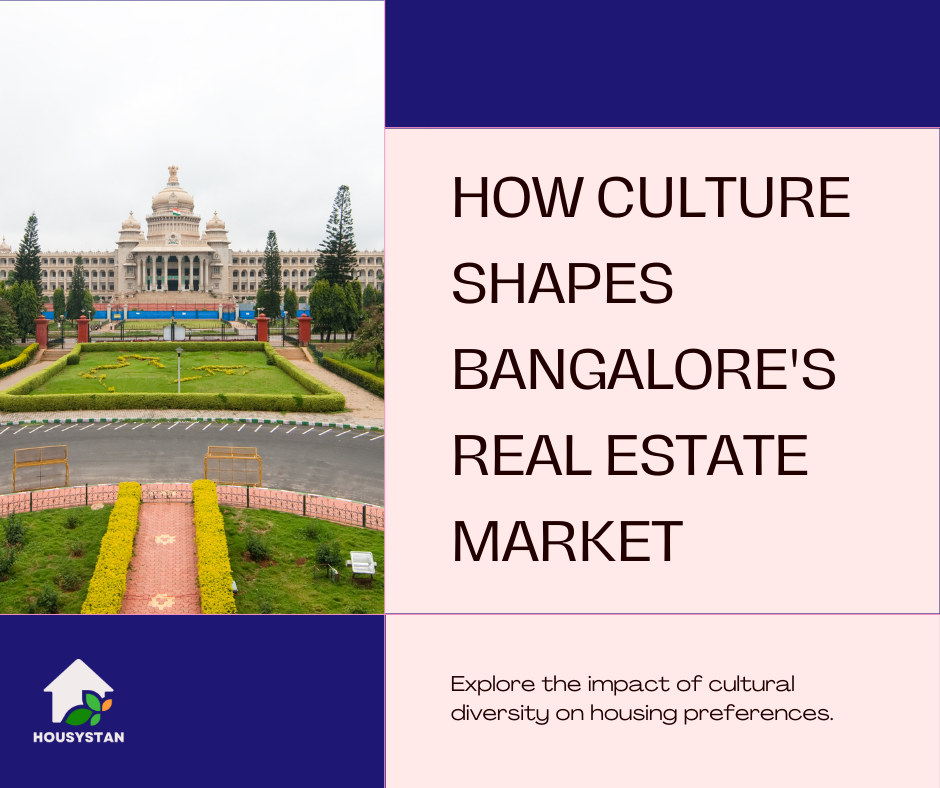
Cultural Influences on the Real Estate Market in Bangalore
Read latest blogs and articles from Housystan
The Information mentioned here was last updated on:
1/4/2026Cultural Influences on the Real Estate Market in Bangalore
Introduction: Bangalore’s Real Estate Through a Cultural Lens
Bangalore, popularly known as the Silicon Valley of India, has witnessed rapid urbanization and a booming real estate market over the last two decades. While economic factors and technological progress are often cited as the main drivers behind the city’s real estate evolution, the influence of culture on property trends remains a compelling and often overlooked aspect. From local traditions to migration patterns, and from educational aspirations to lifestyle choices, Bangalore’s real estate is a vibrant tapestry, woven with the threads of diverse cultural influences.
- Verified Tenants/Buyers
- Unlimited Property Listing
- Zero subscription/charges fee
The Cosmopolitan Nature of Bangalore and Its Impact
Bangalore’s transformation into a cosmopolitan hub has had a profound effect on property demand and development. With a steady influx of professionals from across India and the globe, the city’s residential landscape has adapted to cater to a mosaic of preferences. This diversity is reflected in the variety of housing options available, ranging from traditional independent houses to luxury apartments, gated communities, and modern villas. Developers are increasingly focusing on features like community centers, multilingual staff, and amenities that appeal to both local and non-local buyers. This shift underscores how the city’s multicultural character shapes both supply and demand in the housing market.
Migration Trends and Shifting Housing Preferences
Bangalore’s IT and start-up ecosystem acts as a magnet for talent, drawing people from different regions with unique lifestyles and expectations. The influx of young professionals, especially from northern and eastern parts of India, has led to a surge in demand for rental properties and compact apartments near technology parks and commercial hubs. As a result, once-traditional neighborhoods have transformed into bustling urban centers, with a mix of cultures influencing everything from architectural styles to neighborhood amenities. This trend highlights how cultural migration patterns can redefine the urban real estate map.
Traditional Values Versus Modern Aspirations
Despite its modern outlook, Bangalore retains a strong connection to its roots and traditions. For many local families, owning a piece of land or an independent house remains a symbol of stability and status. Traditional South Indian architectural elements—such as courtyards, verandahs, and intricate woodwork—still find favor among buyers seeking to blend heritage with contemporary comforts. At the same time, the younger generation, influenced by global exposure and fast-paced lifestyles, often prefers high-rise living, smart homes, and eco-friendly developments. The coexistence of these contrasting preferences is a testament to how cultural values and aspirations shape real estate choices in Bangalore.
Community Living and Social Infrastructure
Community living is an intrinsic part of Bangalore’s culture, a fact that has been embraced by real estate developers. Gated communities and apartment complexes are designed to foster social interactions, with spaces for cultural events, festivals, and group activities. Proximity to places of worship, educational institutions, and recreational facilities often drives buyer decisions, reflecting the cultural priority given to holistic living. Additionally, developers are increasingly integrating community halls, clubhouses, and spaces for traditional celebrations, catering to the city’s culturally active population.
Festivals and Seasonal Trends in Property Transactions
Festive seasons such as Ugadi, Diwali, and Dussehra are considered auspicious for making significant investments in Bangalore, including property purchases. Real estate transactions often spike during these periods, as buyers seek to align their decisions with cultural and religious beliefs. Developers, in turn, roll out special offers and discounts, tapping into the festive sentiment. This cyclical trend is a unique feature of Bangalore’s real estate market, demonstrating how deep-rooted cultural practices continue to influence modern economic activity.
Language and Localization in Real Estate Marketing
Language plays a critical role in Bangalore’s real estate marketing strategies. With a diverse population, developers utilize multilingual advertising to reach broader audiences, employing Kannada, Hindi, English, and even regional languages specific to target buyer segments. Localization of marketing material, including culturally resonant imagery and references, helps establish trust and relatability, driving sales and fostering stronger community engagement. This targeted approach underscores the importance of cultural sensitivity in successful real estate transactions.
Educational Aspirations Driving Neighborhood Choices
Education is a core value for many families in Bangalore, with proximity to reputed schools and colleges often influencing real estate decisions. Parents prioritize homes near leading educational institutions, and entire neighborhoods have developed a reputation for their academic ecosystem. Areas such as Whitefield, Koramangala, and Indiranagar are popular not only for their connectivity and amenities but also for their proximity to top schools and colleges. The cultural emphasis on education thus acts as a significant driver in shaping the city’s real estate landscape.
Preserving Heritage Amidst Urban Development
As Bangalore continues to expand, the challenge of balancing heritage preservation with modern development has come to the fore. Iconic areas such as Basavanagudi, Malleswaram, and Jayanagar are known for their traditional charm, historic homes, and tree-lined avenues. While there is pressure to redevelop these localities to meet growing demand, there is also a strong movement among residents to protect the cultural and architectural heritage. This ongoing dialogue between progress and preservation adds another layer of complexity to Bangalore’s real estate narrative.
The Rise of Cultural Hotspots and Lifestyle-Oriented Developments
With its thriving arts, music, and food scenes, Bangalore has seen the emergence of cultural hotspots that attract homebuyers seeking a vibrant lifestyle. Areas like Indiranagar, Koramangala, and HSR Layout are not only tech and business hubs but also centers for nightlife, dining, and cultural events. Developers leverage these lifestyle factors in their projects, offering spaces that blend work, play, and cultural engagement. The demand for such developments signals a shift from purely functional housing to experience-driven real estate investments.
Conclusion: The Cultural Soul of Bangalore’s Real Estate
Bangalore’s real estate market is a dynamic reflection of its cultural evolution. From the influence of migration and cosmopolitanism to the preservation of traditional values, culture shapes the city’s property trends in profound ways. For investors, developers, and homebuyers alike, understanding these cultural nuances is key to making informed decisions in this ever-changing market. As Bangalore continues to grow, its unique blend of tradition and modernity will ensure that culture remains at the heart of its real estate journey, shaping the cityscape for generations to come.