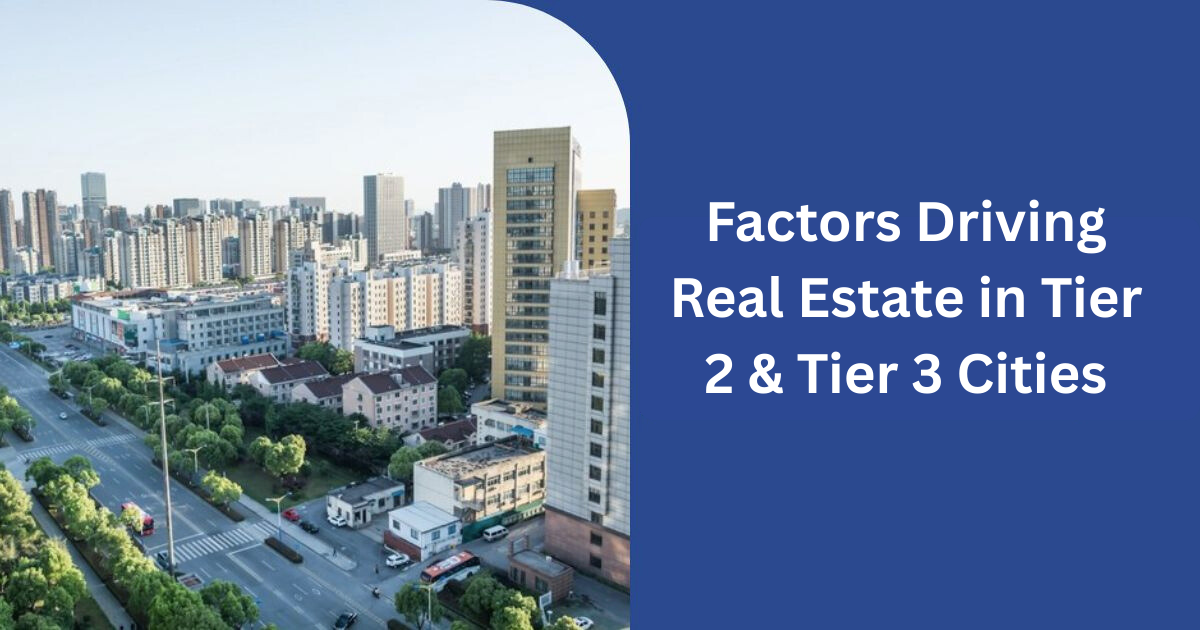
Factors Driving Real Estate in Tier 2 & Tier 3 Cities
Read latest blogs and articles from Housystan
The Information mentioned here was last updated on:
1/4/2026Over the past decade, the real estate landscape has been undergoing a quiet but powerful transformation. While major metropolitan areas once dominated property investment and development, Tier 2 and Tier 3 cities are now becoming the new growth centers for real estate. Cities that were previously considered secondary markets are witnessing a steady rise in housing demand, infrastructure development, and business activity.
This shift is not accidental. It is the result of several economic, social, and technological factors that have made smaller cities increasingly attractive for both homebuyers and investors. Lower living costs, improved connectivity, government initiatives, and the growing acceptance of remote work have all contributed to the rising demand for residential and commercial properties in these regions.
- Verified Tenants/Buyers
- Unlimited Property Listing
- Zero subscription/charges fee
Rising Affordability and Lower Property Prices
One of the strongest factors fueling real estate demand in smaller cities is affordability. Property prices in major metropolitan areas have increased sharply over the years, making homeownership difficult for many middle-income families.
In contrast, Tier 2 and Tier 3 cities offer significantly lower property prices. Buyers can often purchase larger homes or better locations at a fraction of the cost compared to major cities. This affordability allows families to invest in property earlier in their careers and enjoy better living standards.
Lower prices also attract investors who are looking for properties with long-term appreciation potential. Since these markets are still developing, property values often have more room for growth.
Improvement in Infrastructure and Connectivity
Infrastructure development has played a major role in the rise of real estate in smaller cities. Governments and local authorities have been investing heavily in roads, highways, airports, rail networks, and public transportation systems.
Improved connectivity allows people to travel easily between smaller cities and major economic hubs. For example, expressways and new railway lines have significantly reduced travel time between many emerging cities and metropolitan regions.
Better infrastructure also supports business activity. As transportation and communication improve, companies find it easier to operate in smaller cities, which further boosts housing demand.
Growth of Local Industries and Employment Opportunities
Economic development is another key driver behind the real estate boom in Tier 2 and Tier 3 cities. Many of these cities are becoming centers for industries such as manufacturing, information technology, education, healthcare, and tourism.
As industries grow, they create employment opportunities that attract workers and professionals from nearby towns and villages. This migration increases demand for housing, rental properties, and commercial spaces.
Several companies are also expanding their operations to smaller cities due to lower operational costs and the availability of skilled talent. This trend further strengthens local economies and supports the real estate market.
Changing Work Culture and Remote Work Trends
The shift toward remote and hybrid work models has significantly influenced residential preferences. Many professionals no longer need to live close to their offices in expensive metropolitan areas.
This flexibility allows people to relocate to smaller cities where they can enjoy larger homes, quieter surroundings, and lower living expenses. For families, this often means a better quality of life with less congestion and pollution.
Developers in Tier 2 and Tier 3 cities are responding to this trend by building modern residential projects with amenities such as high-speed internet, workspaces, parks, and community facilities.
Government Policies and Housing Initiatives
Government initiatives have also played a major role in encouraging real estate development outside major cities. Various housing programs and urban development schemes aim to improve living conditions and expand housing supply in smaller regions.
Subsidized housing programs, tax benefits, and incentives for developers have made it easier for both buyers and builders to participate in these markets. Policies focused on smart city development and urban renewal are also helping modernize infrastructure and attract investment.
These initiatives not only increase housing availability but also improve the overall appeal of smaller cities as residential destinations.
Migration from Metropolitan Areas
Another noticeable trend is the movement of people from large metropolitan cities to smaller urban centers. Rising living costs, traffic congestion, and overcrowding have made life in major cities increasingly challenging.
Many individuals and families are choosing to relocate to Tier 2 and Tier 3 cities where life is more affordable and less stressful. These cities often provide cleaner environments, shorter commuting times, and a stronger sense of community.
Education and healthcare facilities have improved significantly in many smaller cities. New universities, colleges, hospitals, and research centers are being established to serve growing populations.
Students, faculty members, healthcare professionals, and support staff all contribute to the demand for housing in these areas. Rental markets in particular benefit from the presence of educational institutions.
Families are also more willing to settle in smaller cities when quality education and healthcare services are available locally.
Growing Investor Interest
Real estate investors are increasingly exploring Tier 2 and Tier 3 cities due to the potential for long-term growth. Compared to mature metropolitan markets, these cities often offer higher growth potential and lower entry costs.
Investors see opportunities in residential developments, rental housing, retail spaces, and commercial offices. As urbanization continues, demand for property in these areas is expected to grow steadily.
Institutional investors and developers are also entering these markets, bringing better planning, modern design, and improved construction standards.
Lifestyle Preferences and Quality of Life
Lifestyle considerations are becoming an important factor in real estate decisions. Many people are prioritizing spacious homes, access to nature, and a balanced lifestyle.
Smaller cities often provide a better living environment with less pollution, lower noise levels, and more open spaces. Families can enjoy parks, community areas, and safer neighborhoods compared to crowded metropolitan centers.
This shift in lifestyle priorities has increased interest in residential developments that offer modern amenities while maintaining a peaceful environment.
Digital Connectivity and Online Services
The spread of high-speed internet and digital services has made it easier for people to live and work from smaller cities. Online banking, e-commerce, telemedicine, and digital education have reduced the need to be physically present in large urban centers.
Digital connectivity supports remote work, online businesses, and freelancing opportunities. As a result, professionals can choose to live in cities that offer a better quality of life without sacrificing career opportunities.
Developers are recognizing this change by creating residential communities that support digital lifestyles with reliable connectivity and smart home features.
Expansion of Retail and Commercial Spaces
As population and income levels rise in Tier 2 and Tier 3 cities, demand for retail outlets, shopping centers, restaurants, and entertainment venues also increases.
Retail brands and businesses are expanding into these markets to reach new customers. This commercial growth further strengthens the real estate sector by increasing demand for commercial properties.
Mixed-use developments that combine residential, retail, and office spaces are becoming more common in these cities, creating vibrant urban centers that support economic growth.