Future of vertical living in Indian metros
Read latest blogs and articles from Housystan
The Information mentioned here was last updated on:
1/4/2026Future of Vertical Living in Indian Metros: Reimagining Urban Skylines
Introduction: The Rise of Vertical Cities
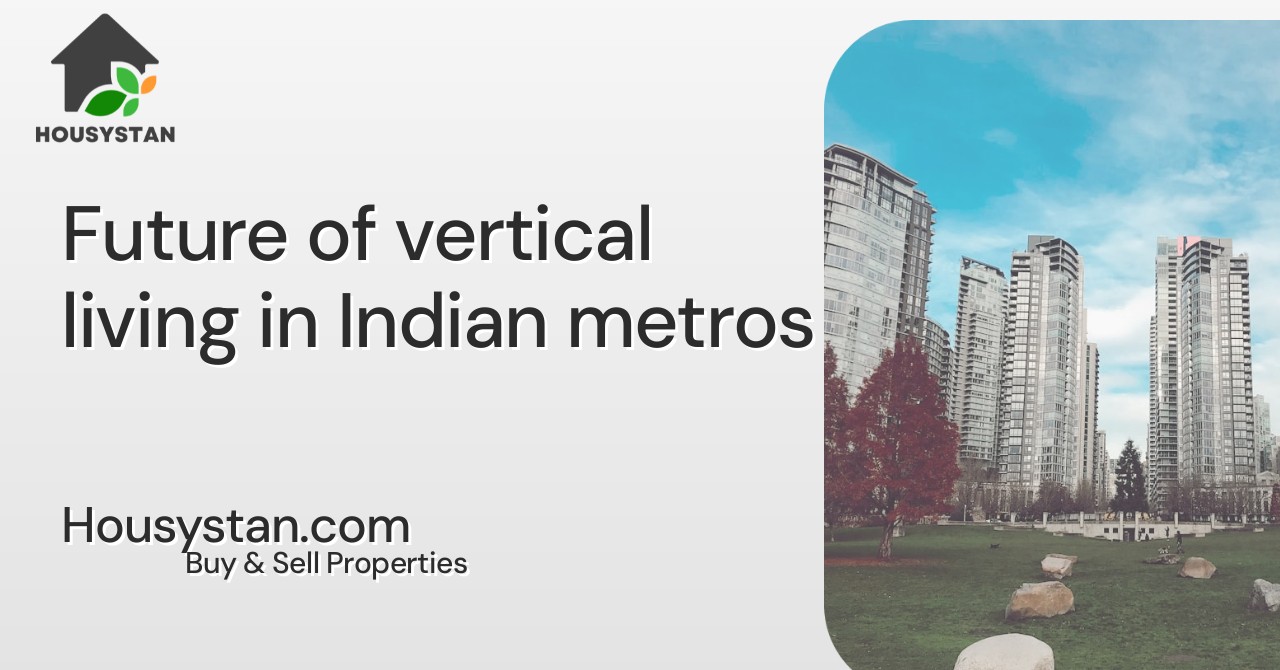
Indian metros are witnessing a dramatic transformation as vertical living becomes an inevitable response to rapid urbanization, population growth, and space constraints. With cities like Mumbai, Bengaluru, Delhi, and Chennai swelling with millions of residents, the demand for land has outstripped supply, pushing developers to build upwards. Vertical living—once a concept limited to luxury apartments and commercial towers—has now emerged as a mainstream housing solution. This article explores the future of vertical living in Indian metros, examining the trends, challenges, innovations, and the impact on urban lifestyles.
- Verified Tenants/Buyers
- Unlimited Property Listing
- Zero subscription/charges fee
Urbanization and Space Crunch: Driving Factors
India’s urban population is projected to reach 600 million by 2030, according to United Nations estimates. The lure of better employment opportunities, education, and healthcare in metros has caused a relentless influx of migrants. However, the supply of horizontal land is finite, particularly in city centers. As a result, vertical living—high-rise apartments, condominiums, and skyscrapers—has become essential to accommodate soaring populations. New zoning policies and FAR (Floor Area Ratio) relaxations have further encouraged vertical construction, signaling a paradigm shift in the urban landscape.
Technological Innovations Reshaping Skyscraper Living
Technological advancements are revolutionizing the way vertical communities are designed and managed. Smart buildings equipped with IoT-enabled security, automated energy management, waste recycling systems, and high-speed elevators are now standard in modern high-rises. Moreover, new construction materials and earthquake-resistant designs ensure safety and longevity. The integration of green technologies, such as rainwater harvesting, solar panels, and vertical gardens, is reducing the environmental impact of tall structures, making them more sustainable and resilient for the future.
Sustainability: A Core Focus for Future Developments
With increasing environmental concerns, vertical living in Indian metros is embracing sustainability at its core. Developers are incorporating eco-friendly features like energy-efficient lighting, water-saving fixtures, and community recycling programs. Rooftop gardens and sky parks are becoming popular, providing residents with much-needed green spaces and helping combat urban heat. Certifications like IGBC (Indian Green Building Council) and LEED are now benchmarks for new projects, ensuring that vertical communities contribute positively to urban ecosystems.
Changing Lifestyles: Community and Convenience
Vertical living is reshaping urban lifestyles, offering residents unmatched convenience and a sense of community. Modern high-rises in metros come with integrated facilities—swimming pools, gyms, co-working spaces, shopping arcades, and play areas—within the premises. This “walk-to-everything” model reduces travel time and fosters social interaction among neighbors. Gated vertical communities offer enhanced security and privacy, making them attractive for nuclear families, young professionals, and retirees alike. The concept of shared amenities is also making housing more affordable and accessible to a wider demographic.
Challenges: Infrastructure, Affordability, and Inclusivity
Despite its advantages, the future of vertical living in Indian metros faces significant challenges. Infrastructure bottlenecks, such as overburdened roads, water shortages, and inadequate waste management, often limit the benefits of high-density living. Affordability remains a major concern, especially for the lower and middle-income segments. Inclusive urban planning is needed to ensure that vertical living is not just a privilege for the wealthy but an accessible option for all citizens. Policymakers and developers must invest in robust public transportation, social infrastructure, and affordable housing schemes to make vertical living truly sustainable.
Policy Support and Urban Planning
The government’s proactive policies are crucial for the success of vertical living in metros. Recent amendments in Development Control Regulations (DCR) and increased FAR in cities like Mumbai and Delhi have unlocked new opportunities for high-rise construction. Initiatives like the Pradhan Mantri Awas Yojana (PMAY) and the Smart Cities Mission are further fueling the growth of vertical communities. Urban planners are now focusing on mixed-use developments, transit-oriented projects, and integrated townships to ensure holistic urban growth. The collaboration between public and private sectors will be key in addressing challenges and scaling up vertical infrastructure.
Future Trends: Smart, Connected, and Flexible Living
The next decade will witness a surge in “smart towers” and digitally connected vertical neighborhoods. Remote working trends, accelerated by the pandemic, are influencing the design of home offices and flexible layouts within apartments. Digital concierge services, app-based facility management, and personalized resident experiences are set to become the norm. Developers are also experimenting with modular construction techniques to speed up delivery and reduce costs. As the demand for urban housing intensifies, vertical living will evolve to offer not just shelter, but a holistic lifestyle solution that blends convenience, connectivity, and community.
Conclusion: A Vertical Future for Indian Metros
The future of vertical living in Indian metros is bright, dynamic, and full of promise. While challenges around infrastructure, affordability, and inclusivity persist, the convergence of technology, policy support, and changing urban aspirations is paving the way for a new era of high-rise living. As skylines soar higher, Indian cities are not just building upwards—they are building smarter, greener, and more connected communities for the generations to come. The journey towards vertical cities is not just about architecture; it’s about reimagining urban life itself.