The Changing Landscape of Homes in Bangalore: From Traditional to Modern Living
Read latest blogs and articles from Housystan
The Information mentioned here was last updated on:
1/4/2026The Changing Landscape of Homes in Bangalore: From Traditional to Modern Living
Introduction: Bangalore’s Housing Evolution
Bangalore, often dubbed the Silicon Valley of India, has witnessed a remarkable transformation in its residential landscape over the past few decades. As the city has grown from a quiet, green town to a bustling metropolis, the nature of homes in Bangalore has evolved alongside. Today, a blend of tradition and modernity defines the city’s housing sector, reflecting its rich heritage and cosmopolitan aspirations. This article delves into the shifting patterns of home design, architecture, and living preferences in Bangalore, highlighting the factors driving these changes and what they mean for current and future homeowners.
- Verified Tenants/Buyers
- Unlimited Property Listing
- Zero subscription/charges fee
Traditional Bangalore Homes: Rich Heritage and Cultural Roots
Historically, Bangalore’s homes were built to accommodate extended families, emphasize community living, and adapt to the city’s moderate climate. These houses, often found in old localities like Basavanagudi and Malleswaram, feature spacious courtyards, high ceilings, and locally sourced materials such as red oxide flooring and terracotta tiles. Ornate wooden doors, intricate jaali windows, and deep verandas are hallmarks of these traditional homes, which were designed for cross-ventilation and natural light.
Traditional homes were more than just shelters; they were an embodiment of culture and lifestyle, fostering close-knit communities and intergenerational ties. The craftsmanship and attention to detail in these structures remain a testament to Bangalore’s architectural legacy.
The Onset of Urbanization: A New Demand for Housing
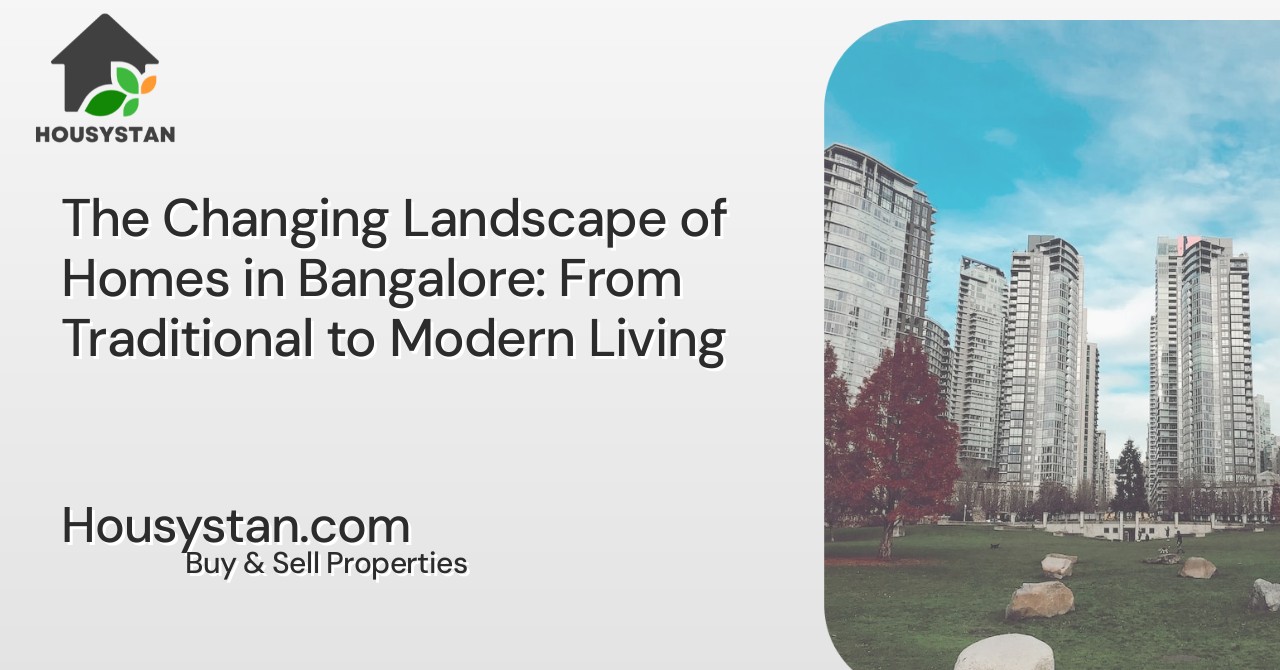
With the IT boom in the 1990s, Bangalore experienced unprecedented urbanization. A surge in population and changing work patterns led to a spike in demand for housing, especially among young professionals and nuclear families. The city’s skyline began to change, with high-rise apartments and gated communities replacing old bungalows and independent houses.
Developers started to focus on vertical growth, leading to a proliferation of residential towers in areas like Whitefield, Electronic City, and Sarjapur Road. These modern complexes offered amenities such as swimming pools, gyms, and clubhouses, catering to a new urban lifestyle. The emphasis shifted from sprawling family homes to compact, maintenance-friendly apartments that promised security and convenience.
Modern Living Spaces: Innovation Meets Comfort
Contemporary homes in Bangalore are characterized by innovative design, smart technology, and a focus on sustainability. Open floor plans, modular kitchens, and large windows for natural light are now standard features. Smart home automation systems for lighting, security, and climate control are increasingly becoming popular among tech-savvy residents.
Green building practices are also on the rise, with eco-friendly materials, rainwater harvesting, and solar panels becoming integral to new constructions. Developers and homeowners alike are recognizing the significance of energy efficiency and environmental responsibility in modern living. The architecture now seamlessly blends aesthetic appeal with functional benefits, meeting the demands of a globalized urban population.
Luxury and Customization: Changing Aspirations
As disposable incomes rise and lifestyles become more aspirational, there's a growing demand for luxury homes and personalized living experiences in Bangalore. Premium villas, penthouses, and duplex apartments now dot upscale neighborhoods like Koramangala, Indiranagar, and Jayanagar. These residences boast high-end finishes, private gardens, smart security systems, and bespoke interiors tailored to individual tastes.
Customization is a key trend in the current market, with homeowners seeking unique design elements, branded fittings, and flexible spaces that can serve multiple purposes. Home offices, entertainment zones, and wellness areas are increasingly common, reflecting post-pandemic shifts in how people use their living spaces.
Community Living and Integrated Townships
Another significant shift is the rise of integrated townships and co-living spaces. These developments offer a holistic lifestyle with schools, shopping centers, healthcare, and recreational facilities within a single campus. Integrated communities foster social interaction and provide a sense of belonging in a rapidly urbanizing city.
Co-living spaces, in particular, cater to young professionals and entrepreneurs who prioritize affordability and networking. These setups offer fully furnished homes, shared amenities, and flexible lease terms, making them an attractive option for Bangalore’s dynamic workforce.
Technology and Smart Homes: The Digital Revolution
The digital revolution has left an indelible mark on Bangalore’s housing sector. Smart homes equipped with IoT devices, automated lighting, and remote-controlled appliances are becoming increasingly mainstream. Homeowners can now control security systems, temperature, and entertainment units from their smartphones, offering unmatched convenience and peace of mind.
Real estate portals and virtual tours have also simplified the process of buying, renting, or selling properties, making homeownership more accessible and transparent. This tech-driven approach aligns with the city’s reputation as a technology hub and sets new standards for urban living.
Challenges and the Road Ahead
Despite these advancements, Bangalore’s housing sector faces several challenges. Rapid urbanization has led to rising property prices, traffic congestion, and environmental concerns. The city must balance growth with sustainability, ensuring that new developments are inclusive, eco-friendly, and resilient to future demands.
Affordable housing remains a pressing issue, with many middle-class families struggling to find homes within their budget. Policymakers and developers are under increasing pressure to create solutions that address housing shortages without compromising on quality or environmental standards.
Conclusion: A City in Transition
The changing landscape of homes in Bangalore is a reflection of the city’s evolution from a laid-back, tradition-rich town to a global innovation hub. As architectural styles, design preferences, and living patterns shift, one thing remains constant: Bangalore’s ability to adapt and reinvent itself. Whether you prefer the charm of a traditional home or the convenience of a smart apartment, the city offers a diverse range of options to suit every lifestyle. As Bangalore continues to grow, its homes will remain at the heart of its identity, blending heritage with modernity for generations to come.