Urban Migration and Its Impact on Real Estate Demand
Read latest blogs and articles from Housystan
The Information mentioned here was last updated on:
1/4/2026Urban migration has become one of the most defining trends of the modern world. Across developing and developed countries alike, millions of people move from rural regions and small towns to cities every year. This movement is often driven by the search for better employment opportunities, improved education, enhanced healthcare facilities, and a higher standard of living. As cities grow due to this steady influx of people, the demand for real estate rises significantly. Housing, commercial spaces, rental properties, and infrastructure development all expand in response to urban population growth.
Understanding how urban migration shapes real estate demand is essential for city planners, property developers, investors, and policymakers. The relationship between migration and property markets reveals how urban growth transforms both housing availability and property values.
- Verified Tenants/Buyers
- Unlimited Property Listing
- Zero subscription/charges fee
Understanding Urban Migration
Urban migration refers to the movement of people from rural areas or smaller towns into cities. While migration has existed for centuries, rapid industrialization and globalization have accelerated the process in recent decades. Cities are often viewed as centers of economic activity, where jobs in industries, services, and technology are more readily available.
Young professionals, students, and families often relocate to cities in search of career advancement and better lifestyle options. For many migrants, urban areas provide greater access to transportation networks, entertainment, healthcare services, and educational institutions.
As a result, cities experience steady population growth. When the number of people moving into a city rises faster than the available housing supply, real estate markets begin to experience pressure, leading to increased demand for residential and commercial properties.
Rising Demand for Residential Housing
One of the most direct impacts of urban migration is the growing demand for residential housing. As more individuals and families settle in urban areas, the need for apartments, houses, and shared living spaces increases.
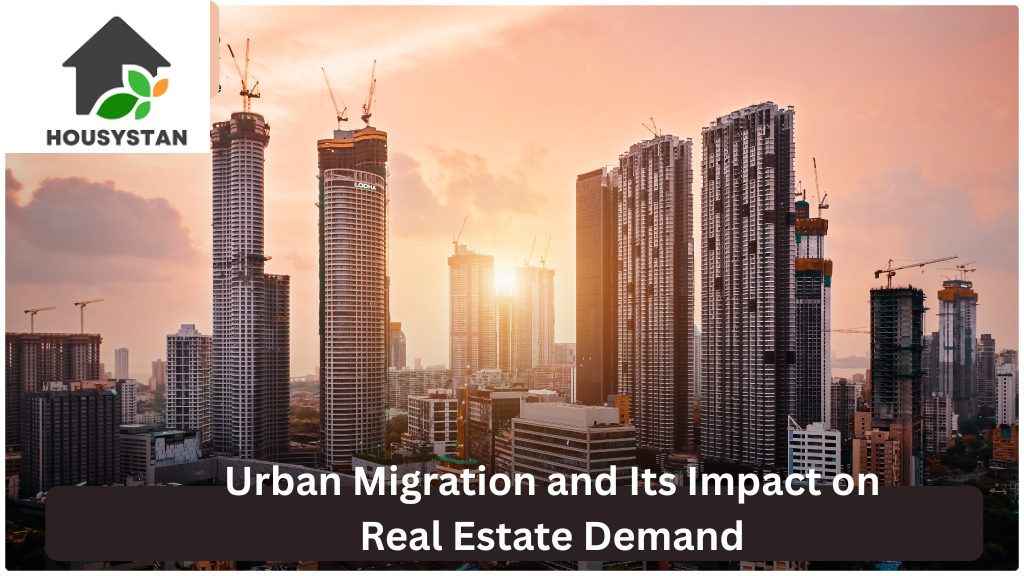
Property developers often respond by constructing new residential buildings, gated communities, and high-rise apartments. In densely populated cities where land availability is limited, vertical housing development becomes a practical solution. High-rise buildings allow developers to accommodate more residents within a smaller land area.
Rental housing also becomes increasingly important. Many migrants initially choose to rent rather than buy property because of financial limitations or uncertain job stability. This trend drives growth in the rental housing market and encourages investors to purchase properties specifically for rental income.
Affordable housing projects also gain importance in cities experiencing large-scale migration. Migrant workers and lower-income families often struggle to afford high property prices, creating demand for budget-friendly housing options.
Expansion of Suburban and Peripheral Areas
Urban migration does not only affect city centers. As property prices rise in central urban areas, many residents begin to move toward suburban regions and city outskirts where housing is more affordable.
This shift leads to the development of satellite towns and residential communities outside the main urban core. Improved transportation infrastructure, such as metro systems, highways, and commuter rail networks, makes it easier for people to live farther from their workplaces.
Suburban real estate markets often experience rapid growth during periods of intense urban migration. Developers build townships, residential complexes, and mixed-use projects to meet the needs of residents who prefer larger homes and quieter environments while still maintaining access to city jobs.
These peripheral areas gradually transform into thriving residential hubs with schools, hospitals, shopping centers, and recreational spaces.
Increased Demand for Commercial Real Estate
Urban migration not only affects housing but also drives demand for commercial real estate. As city populations grow, businesses expand to serve the increasing number of consumers.
Retail spaces, office buildings, restaurants, and shopping malls are developed to meet the needs of urban residents. Corporate offices often cluster in central business districts, attracting professionals who then seek nearby housing options.
The growth of technology firms, startups, and service industries in major cities has also fueled demand for office spaces and co-working environments. Cities with strong employment opportunities tend to experience simultaneous growth in both residential and commercial real estate sectors.
Small businesses also benefit from urban migration. Grocery stores, cafes, pharmacies, and other local services emerge in neighborhoods with rising populations, creating further demand for commercial properties.
Impact on Property Prices and Investment Opportunities
As demand for housing and commercial spaces rises, property prices often increase. In cities experiencing high levels of migration, limited land supply combined with growing demand can push property values upward.
For real estate investors, urban migration can create significant opportunities. Rental properties often generate steady income because migrants frequently rely on rented accommodation during their early years in a city. Investors may purchase apartments, studio units, or shared housing spaces to cater to this demand.
Long-term property appreciation is another attractive factor. Cities that continue to attract migrants often experience sustained growth in property values over time.
Infrastructure Development and Urban Planning
Urban migration places pressure on city infrastructure. Transportation systems, water supply, waste management, and public services must expand to accommodate growing populations.
In response, governments and urban planners often launch infrastructure projects that support real estate development. New roads, metro lines, airports, and public transit systems can significantly influence property demand in nearby areas.
Real estate developers closely monitor infrastructure projects because improved connectivity often increases property value. Areas located near transportation hubs or business districts tend to attract both homebuyers and investors.
Urban planning also plays a key role in balancing development. Zoning regulations, housing policies, and land-use planning help manage population growth while maintaining livable urban environments.
Changing Housing Preferences
Urban migration also influences the type of housing people seek. Younger migrants, particularly working professionals, often prefer compact apartments located close to workplaces and public transportation.
Co-living spaces and shared accommodation have gained popularity in many cities. These housing arrangements offer affordability and convenience for individuals who are new to urban life.
Families, on the other hand, may prefer larger apartments or suburban homes with access to schools and green spaces. As a result, developers must offer a range of housing options to cater to diverse demographic groups.
Sustainability has also become an important factor in urban housing. Energy-efficient buildings, green spaces, and environmentally responsible construction practices are increasingly valued by modern urban residents.
Challenges for Urban Real Estate Markets
Despite the opportunities created by urban migration, rapid population growth can also create challenges for real estate markets. Housing shortages may arise if construction cannot keep pace with demand.
Overcrowding, traffic congestion, and rising living costs are common concerns in rapidly expanding cities. In some cases, informal housing settlements develop when migrants cannot access formal real estate markets.
Governments and developers must work together to address these challenges by increasing housing supply, promoting affordable housing initiatives, and investing in infrastructure that supports sustainable urban growth.
Urban migration remains a powerful force shaping modern cities. As people continue to move in search of opportunity and better living standards, real estate markets will continue evolving to meet the needs of expanding urban populations.