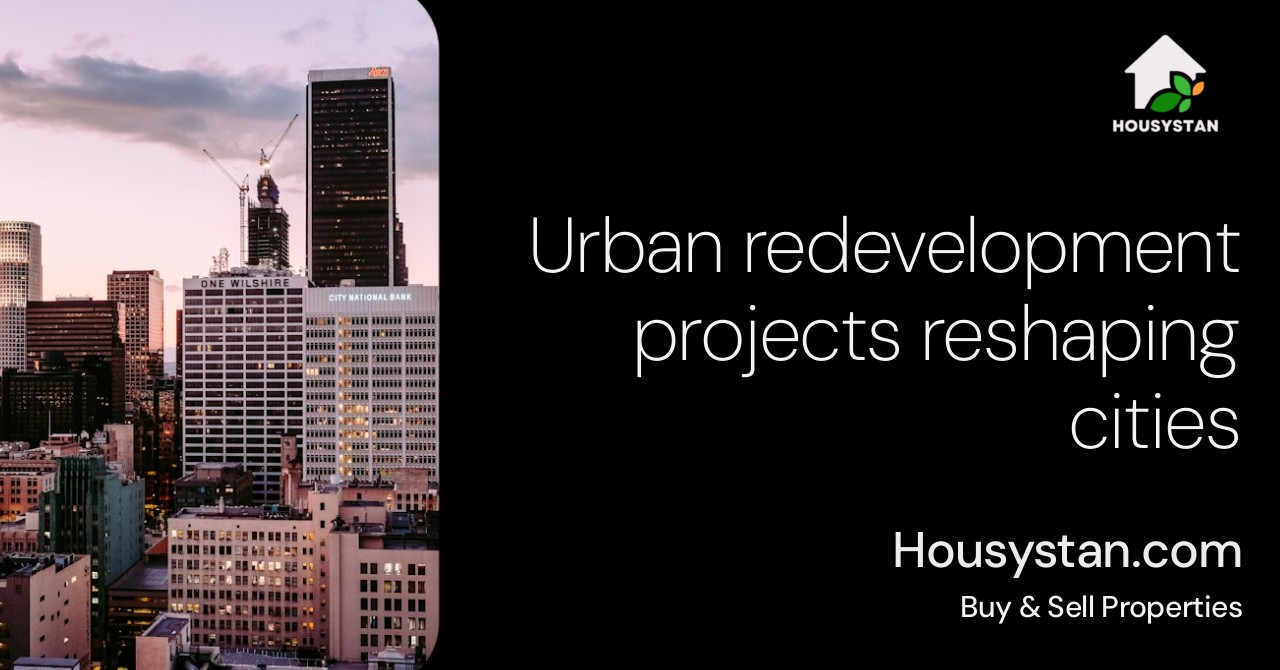
Urban redevelopment projects reshaping cities
Read latest blogs and articles from Housystan
The Information mentioned here was last updated on:
1/4/2026Urban Redevelopment Projects Reshaping Cities: Transforming Urban Landscapes for the Future
Introduction: A New Era of Urban Transformation
Cities across the globe are undergoing profound changes thanks to ambitious urban redevelopment projects. These initiatives are not only rejuvenating aging infrastructures but also redefining the way people live, work, and interact within metropolitan environments. From eco-friendly skyscrapers to revitalized waterfronts, urban redevelopment is at the forefront of shaping more sustainable, livable, and inclusive cities. As urban populations continue to grow, the importance of thoughtful redevelopment has never been more critical.
- Verified Tenants/Buyers
- Unlimited Property Listing
- Zero subscription/charges fee
The Driving Forces Behind Urban Redevelopment
Several factors are fueling the surge in urban redevelopment projects. Rapid population growth, shifting economic centers, climate change concerns, and evolving lifestyle preferences all play a pivotal role. Municipalities are looking for ways to revitalize underutilized spaces, attract investment, and improve quality of life for residents. As a result, city planners, architects, and developers are collaborating to implement innovative solutions that address both present and future urban challenges.
Key Features of Modern Urban Redevelopment
Today’s urban redevelopment projects incorporate a range of features aimed at creating holistic urban environments. These include mixed-use developments, green infrastructure, public transportation enhancements, affordable housing, and vibrant public spaces. By integrating these elements, cities can foster economic growth, promote community engagement, and support environmental sustainability.
Mixed-Use Developments: Creating Vibrant City Hubs
One of the hallmarks of contemporary urban redevelopment is the emphasis on mixed-use developments. These projects blend residential, commercial, and recreational spaces, creating dynamic neighborhoods that cater to diverse needs. By encouraging walkability and reducing reliance on cars, mixed-use districts enhance accessibility and support local economies. Notable examples include Hudson Yards in New York City and King’s Cross in London, both of which have transformed previously neglected areas into bustling urban destinations.
Green Infrastructure: Building Sustainable Urban Spaces
Environmental sustainability is a key consideration in today’s urban redevelopment efforts. Projects are increasingly incorporating green infrastructure such as rooftop gardens, green walls, permeable pavements, and urban forests. These features help mitigate the urban heat island effect, improve air quality, and manage stormwater runoff. Cities like Singapore and Copenhagen are leading the way, demonstrating how nature-based solutions can coexist with dense urban development.
Revitalizing Public Transportation Networks
Efficient public transportation is essential for thriving cities. Many redevelopment projects focus on expanding and modernizing transit systems, making it easier for residents to commute and reducing traffic congestion. Integrating bike lanes, pedestrian pathways, and light rail systems not only enhances mobility but also supports a lower carbon footprint. For instance, Los Angeles’ ongoing transit upgrades and Paris’ Grand Paris Express project are reshaping how millions of people navigate urban spaces.
Affordable Housing: Tackling Urban Inequality
Addressing housing affordability is a central goal of many redevelopment initiatives. As property values rise and demand for urban living grows, cities are seeking ways to provide accessible housing options for all income levels. Inclusionary zoning, public-private partnerships, and innovative financing models are being employed to ensure that new developments do not displace existing communities. Projects like Vienna’s social housing program and Toronto’s Regent Park redevelopment offer valuable lessons in balancing growth with social equity.
Reimagining Public Spaces for Community Engagement
Vibrant public spaces are the heart of any successful city. Redevelopment projects often prioritize the creation or enhancement of parks, plazas, and cultural venues that foster community interaction. These spaces become gathering points for festivals, markets, and recreational activities, strengthening the social fabric of urban neighborhoods. The transformation of Seoul’s Cheonggyecheon Stream and the High Line in New York are powerful examples of how neglected infrastructure can be reimagined for public enjoyment.
Economic Benefits of Urban Redevelopment
The economic impact of urban redevelopment cannot be overstated. By attracting new businesses, residents, and visitors, revitalized districts generate significant tax revenue and stimulate job creation. Mixed-use developments, retail spaces, and tourism amenities contribute to vibrant local economies. Additionally, modern infrastructure and improved public amenities boost property values, further incentivizing investment. Research indicates that thoughtfully executed redevelopment projects can spark long-term economic vitality for entire metropolitan regions.
Challenges and Criticisms: Navigating Complex Urban Realities
While the benefits are substantial, urban redevelopment projects are not without challenges. Gentrification, displacement of vulnerable communities, and rising living costs are persistent concerns. Ensuring meaningful community engagement and safeguarding affordable housing are vital to achieving equitable outcomes. Furthermore, balancing historic preservation with the need for modernization requires careful planning and consultation. Transparency, inclusive decision-making, and adaptive policies are essential to navigating these complexities and building trust with stakeholders.
Case Studies: Cities Leading the Way in Urban Redevelopment
Several cities stand out as pioneers in urban redevelopment. In addition to New York, London, and Singapore, cities like Melbourne, Tokyo, and Berlin have launched transformative projects that serve as global benchmarks. Melbourne’s Docklands has evolved from industrial wasteland to a thriving waterfront precinct, while Berlin’s Potsdamer Platz showcases the city’s post-reunification renaissance. These case studies highlight the potential of urban redevelopment to breathe new life into neglected areas while preserving unique cultural identities.
The Future of Urban Redevelopment: Embracing Innovation and Sustainability
Looking ahead, the trajectory of urban redevelopment is set to be defined by technological innovation and sustainability. Smart city technologies, renewable energy integration, and data-driven urban planning are poised to reshape how cities grow and function. As the world grapples with climate change and rapid urbanization, the need for resilient, adaptable, and inclusive urban redevelopment has never been greater. Collaboration between governments, private sector partners, and local communities will be crucial in realizing the full potential of these projects.
Conclusion: Redefining Urban Living Through Redevelopment
Urban redevelopment projects are reshaping cities in bold and imaginative ways, setting the stage for a new era of urban living. By prioritizing sustainability, inclusivity, and community well-being, these initiatives are building more vibrant, resilient, and equitable urban environments. As cities continue to evolve, the lessons learned from successful redevelopment projects will inform the next generation of urban transformation, ensuring that metropolitan areas remain engines of opportunity and innovation for years to come.