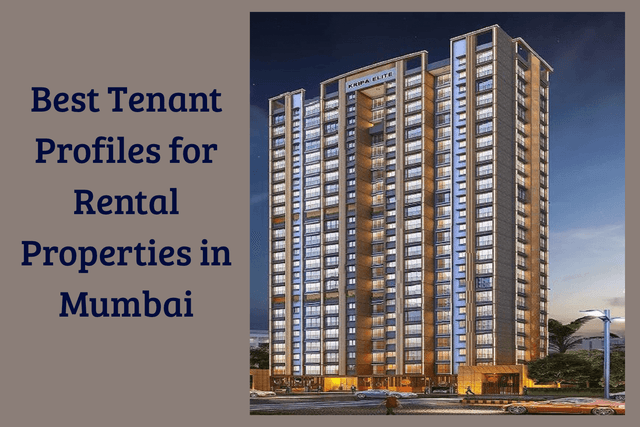
Mumbai's rental property market offers attractive opportunities for homeowners and real estate investors. With professionals moving to the city for work, students arriving for higher education, families looking for better housing and businesses bringing employees to commercial hubs, the demand for rental homes remains diverse. However, finding a tenant is not just about filling a vacant apartment. Choosing the right tenant can make a significant difference to rental income, property maintenance and the overall experience of being a landlord.
For property owners, understanding the best tenant profiles for rental properties in Mumbai is an important part of making a successful investment. Different tenant groups have different housing requirements, rental budgets, lifestyle preferences and expected lengths of stay. While some tenants may offer long-term rental stability, others may be willing to pay higher rent for furnished homes or convenient locations.
Identifying the right tenant profile before purchasing a rental property can also help investors select the right apartment size, furnishing level and locality. Here is a closer look at the tenant categories that landlords and property investors should consider in Mumbai.
1. Working Professionals Seeking Convenient Housing
Working professionals are among the most attractive tenant groups for residential rental properties in Mumbai. The city has a large employment base across banking, finance, information technology, healthcare, media, entertainment and corporate services. Employees relocating to Mumbai often prefer renting an apartment close to their workplace or within easy reach of public transport.
Professionals working in areas such as Andheri, Powai, Bandra Kurla Complex (BKC), Lower Parel, Goregaon and Malad regularly look for rental accommodation that reduces daily travel time.
Many young professionals prefer 1 BHK and 2 BHK apartments because these homes are easier to maintain and generally fit individual or shared rental budgets. Some employees also look for fully furnished apartments that allow them to move in without purchasing furniture and household appliances.
For landlords, working professionals can be a suitable tenant profile because many have regular monthly salaries and predictable work schedules. However, property owners should still verify employment details, income documents and previous rental records before finalising an agreement.
2. Families Looking for Long-Term Rental Homes
Families are another important tenant category in Mumbai's residential rental market. Unlike individuals who may relocate frequently due to job changes, families often prefer staying in one home for several years, particularly when children are studying at nearby schools.
Families generally look for 2 BHK, 3 BHK and larger apartments with practical layouts, sufficient storage, security arrangements and access to everyday facilities. Proximity to schools, hospitals, grocery stores, parks and public transport can influence their rental decisions.
Residential areas such as Thane, Kandivali, Borivali, Chembur, Powai and Mulund attract families looking for a balance between connectivity and residential convenience.
For property owners, family tenants may offer greater rental continuity and reduce the frequency of tenant changes. Fewer changes can also mean lower expenses related to cleaning, repairs, property advertising and finding new occupants.
Landlords should consider whether the apartment is suitable for family living. Functional kitchens, adequate ventilation, safe balconies, lift facilities and reliable water supply can make a property more appealing to this tenant group.
3. Students and Young Adults
Mumbai attracts students from different parts of India because of its educational institutions, colleges and professional training centres. Areas around Churchgate, Matunga, Vile Parle, Santacruz, Dadar and Ghatkopar have demand from students looking for accommodation near educational institutions.
Students generally prefer affordable housing options, including studio apartments, 1 BHK flats and shared 2 BHK or 3 BHK apartments. Their rental budgets may be limited, which makes shared accommodation a popular choice.
For landlords, student tenants can provide opportunities to earn rental income from shared apartments. Instead of renting an entire property to one individual, owners may consider renting rooms to multiple occupants, provided the arrangement is permitted by the housing society and complies with applicable rules.
However, this tenant profile requires careful consideration. Students may have limited independent income, and parents or guardians may need to act as financial guarantors. Property owners should clearly establish responsibility for rent payments, utility bills, property damage and common-area maintenance.
A detailed rental agreement and proper tenant verification can help avoid misunderstandings.
4. Corporate Employees on Temporary Assignments
Mumbai's corporate sector creates demand for short-term and medium-term rental accommodation. Companies frequently transfer employees from other cities or bring professionals to Mumbai for projects, training programmes and temporary assignments.
These employees may need accommodation for a few months or a year, depending on the nature of their work. Many prefer furnished apartments because they do not want to purchase household items for a temporary stay.
Locations close to business districts, including BKC, Andheri East, Powai, Lower Parel and Goregaon, can attract this category of tenants.
Corporate tenants may be particularly suitable for investors who own furnished 1 BHK and 2 BHK apartments. In some cases, companies directly arrange accommodation for employees and make rental payments through their accounts department.
Such arrangements can offer convenience to property owners, but it is important to identify who is legally responsible for rent, property damage and other obligations. Landlords should also clarify the permitted duration of the stay and the process for extending the agreement.
5. Medical Professionals and Healthcare Workers
Mumbai has several major hospitals, medical colleges, diagnostic centres and healthcare facilities. This creates rental demand from doctors, nurses, hospital administrators, visiting consultants and other healthcare professionals.
Healthcare workers often prefer accommodation within a reasonable distance of their workplace, particularly when their duties involve night shifts or emergency calls.
Areas around Parel, Dadar, Mahim, Sion, Andheri and Vile Parle may attract tenants working in nearby hospitals and medical institutions.
Single professionals may prefer compact 1 BHK apartments, while doctors relocating with their families may look for larger homes.
This tenant category can be useful for landlords who own properties near established healthcare centres. A clean, secure and well-maintained apartment with reliable transport access can be an important attraction.
6. NRIs and Returning Indians
Non-resident Indians (NRIs) and Indians returning from overseas can also form part of Mumbai's rental housing market. Some individuals move back to India for professional opportunities, family responsibilities or retirement but may not immediately purchase a home.
Others may need rental accommodation while waiting for their own property to become available.
This tenant group often looks for well-maintained apartments in established residential neighbourhoods. Depending on their budget and family requirements, they may prefer furnished or semi-furnished 2 BHK and 3 BHK homes.
Areas such as Powai, Bandra, Chembur, Andheri, Thane and South Mumbai may attract different segments of returning Indians and overseas professionals.
Landlords should assess the tenant's employment situation, expected duration of stay and payment arrangements. When dealing with tenants who are temporarily relocating, a clearly written rental agreement can help establish expectations from the beginning.
7. Young Couples and Newly Married Professionals
Young couples and newly married professionals represent another promising tenant segment in Mumbai. Many couples move to the city for work or prefer renting a home before making a long-term property purchase.
Their housing requirements generally include a comfortable bedroom, functional kitchen, adequate living space, security and access to workplaces.
A well-designed 1 BHK or compact 2 BHK apartment may be suitable for this group. Locations with good connectivity, nearby supermarkets, healthcare facilities and lifestyle amenities can be particularly attractive.
For landlords, this category can provide rental demand for compact residential apartments. However, tenant selection should always be based on lawful, consistent and objective verification criteria rather than assumptions about a tenant's marital status or personal lifestyle.
Income stability, identity verification, rental history and the ability to meet the agreed payment terms are more relevant factors when evaluating an application.
8. Shared Accommodation Tenants and Co-Living Residents
The rising cost of housing in Mumbai has encouraged many young employees and students to consider shared accommodation. Instead of renting an entire apartment, two or more occupants share the rent and divide household expenses.
This arrangement is common in areas with strong employment and educational demand, including Andheri, Powai, Ghatkopar, Vikhroli, Goregaon and parts of Navi Mumbai.
For property investors, apartments with multiple bedrooms, attached bathrooms and practical common spaces may be suitable for shared rentals.
A 2 BHK or 3 BHK apartment can attract several occupants who prefer affordable housing without compromising on location.
Some landlords also consider furnishing their properties with beds, wardrobes, washing machines, refrigerators and internet connections to appeal to co-living tenants.
However, shared accommodation requires additional attention to occupancy limits, society rules, maintenance responsibilities and rental documentation. Every occupant should be properly identified, and the agreement should clearly mention the responsibilities of all parties.
9. Senior Citizens Looking for Independent Housing
Senior citizens form a smaller but relevant segment of Mumbai's rental housing market. Some older individuals prefer renting an apartment instead of maintaining a large family home. Others relocate closer to their children, relatives or healthcare facilities.
This group generally looks for peaceful residential surroundings, reliable lifts, security, nearby hospitals and easy access to grocery stores and public transport.
Apartments in established residential areas such as Borivali, Mulund, Thane, Chembur and Vile Parle may attract senior tenants.
For landlords, properties with step-free access, functioning lifts, accessible bathrooms and emergency support arrangements can be more attractive to this segment.
Rental agreements should clearly mention maintenance responsibilities, repair procedures and payment schedules. Property owners should also ensure that essential facilities remain functional throughout the tenancy.
Factors to Evaluate Before Selecting a Tenant
Understanding different tenant profiles is only the first step. Property owners must also assess whether a prospective tenant is financially capable and likely to follow the rental agreement.
Some important factors include:
- Income and Payment Capacity: Check whether the tenant has a stable source of income and can comfortably afford the monthly rent. Salary slips, employment letters or other suitable income documents can help establish payment capacity.
- Employment or Financial Stability: Understand the tenant's current employment or business situation. For students and dependants, a parent, guardian or suitable guarantor may provide additional financial assurance.
- Previous Rental History: Where possible, speak to previous landlords to understand the tenant's payment record, property maintenance habits and adherence to rental terms.
- Identity and Address Verification: Complete appropriate identity and address checks. Landlords in Mumbai should also follow applicable Maharashtra tenant verification and police intimation procedures.
- Rental Duration: Discuss how long the tenant expects to stay. This helps property owners plan their rental income and manage future vacancies.
- Number of Occupants: Confirm how many people will live in the apartment. The occupancy details should be recorded in the rental agreement and should comply with applicable housing society rules.
- Property Maintenance: Discuss responsibilities for minor repairs, utility payments, cleaning and damage. Clear expectations can prevent disputes during the tenancy.
How Tenant Profiles Influence Rental Returns in Mumbai
Tenant profiles can influence both the rent an apartment earns and the consistency of rental income. For instance, a furnished apartment near a corporate office may command higher rent than an unfurnished property in the same neighbourhood. However, furnishing also involves an additional investment and ongoing maintenance.
Family tenants may prefer longer rental arrangements, helping owners reduce vacancy periods and the cost of finding new occupants. Shared accommodation may generate higher combined rent in some cases, but it can also involve more frequent maintenance and management work.
Investors should therefore compare the expected monthly rent with the total cost of owning and maintaining the property. Expenses such as society maintenance charges, property taxes, repairs, furnishing, insurance and periods without tenants should be included in the calculation.
Before purchasing a property, investors can speak to local brokers, review comparable rental listings and understand which tenant categories are actively looking for homes in that particular neighbourhood.
This approach helps buyers avoid choosing an apartment based only on its purchase price or expected rent. Instead, they can evaluate whether the property matches actual tenant demand and offers practical rental opportunities over the long term.
India’s real estate market continues to transform alongside infrastructure expansion, urban development, and changing homebuyer expectations. As new residential corridors and growth micro-markets emerge, opportunities are expanding beyond traditional city centres. Buyers and investors who track infrastructure projects, connectivity improvements, and planned urban growth are better positioned to identify high-potential locations and maximise long-term property value. Whether the objective is buying a home for self-use or building a diversified real estate investment portfolio, success depends on choosing the right location, entering at the right time, and making well-informed decisions. Evaluating neighbourhood development trends, selecting legally compliant and transparent projects, and aligning property purchases with long-term financial and lifestyle goals can significantly improve overall returns and ownership satisfaction. As the sector continues to mature, real estate remains one of the most stable long-term investment options. With careful planning, market awareness, and strategic decision-making, property investments made today can support wealth creation, financial security, and sustainable lifestyle growth in the years ahead.
- Verified Tenants/Buyers
- Unlimited Property Listing
- Zero subscription/charges fee