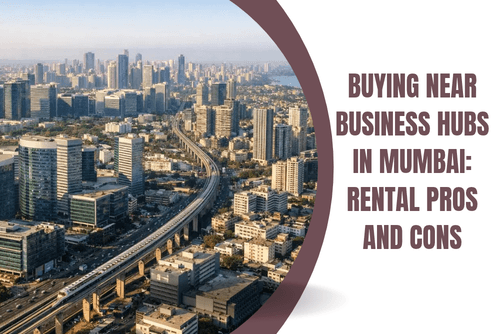
Mumbai has always been one of India's most active real estate markets, attracting professionals, business owners, students and investors from across the country. Among the many factors that influence property demand in the city, proximity to business hubs plays an important role. Areas located near major office districts, IT parks, commercial centres and corporate offices often attract tenants looking for convenient access to their workplaces. This makes buying a property near business hubs in Mumbai an interesting option for people seeking regular rental income.
For property investors, locations close to employment centres can offer access to a steady pool of working professionals. However, higher property prices, changing office attendance patterns and competition from other rental properties can affect the returns. Therefore, buyers need to understand both the advantages and disadvantages before investing in an apartment near Mumbai's business districts.
Why Business Hubs Matter in Mumbai's Rental Property Market
Mumbai's business districts attract thousands of employees every day. Professionals working in banking, finance, information technology, consulting, media, healthcare and other industries often prefer homes that reduce their daily travel time. Long commuting hours and crowded public transport make convenient residential locations particularly attractive.
Business hubs such as Bandra-Kurla Complex (BKC), Lower Parel, Powai, Andheri East, Goregaon and Airoli have created demand for nearby residential properties. These locations are connected to offices, commercial buildings, transport facilities, restaurants and everyday services.
For landlords, this creates an opportunity to attract tenants who value convenience. A well-maintained apartment within a reasonable distance of a major employment centre may receive more attention than a similar property located far from workplaces.
However, proximity alone does not guarantee strong rental income. Property prices, apartment size, building quality, transport connections and local facilities also influence how easily a property can be rented.
Pros of Buying Property Near Business Hubs in Mumbai
1. Consistent Demand from Working Professionals
One of the biggest advantages of buying property near business hubs in Mumbai is the availability of potential tenants. Corporate employees, IT professionals, managers, consultants and executives regularly look for rental accommodation close to their workplaces.
For example, residential properties near BKC may attract employees working in banking, finance and corporate offices. Similarly, apartments in Powai and Andheri East may appeal to professionals employed in technology companies and commercial establishments.
This wide tenant base can help landlords find suitable occupants without depending entirely on seasonal rental demand.
Locations with several employment centres nearby may offer an additional advantage because tenants have more than one reason to consider living in the area.
2. Reduced Daily Travel Time Makes Properties Attractive
Mumbai's traffic conditions and crowded local trains make daily commuting a major concern for working professionals. Many tenants are willing to pay a reasonable premium for homes that allow them to reach their offices quickly.
A property located close to an office district, metro station or railway station can become more attractive because it reduces travel time and transportation expenses.
For instance, an apartment in Andheri East with convenient access to commercial offices and metro connectivity may appeal to employees who want to avoid long journeys. Likewise, properties near Lower Parel can attract professionals working in nearby corporate buildings.
This preference for convenience can help landlords position their apartments competitively in the rental market.
3. Potential for Better Rental Income
Properties near established business districts may command higher monthly rents compared to homes in locations with limited employment opportunities. Tenants often consider the overall convenience of a neighbourhood rather than comparing rent alone.
A furnished or semi-furnished apartment with essential facilities can be particularly attractive to professionals relocating to Mumbai for work.
Investors who purchase properties in suitable locations and maintain them properly may benefit from stronger rental demand. However, higher rent does not automatically mean better investment returns. Buyers must also consider the purchase price, maintenance charges, property taxes and other expenses.
The relationship between monthly rental income and the total property investment is important when evaluating the financial benefits.
4. Access to Better Social Infrastructure
Business hubs are often surrounded by developed residential neighbourhoods with access to restaurants, supermarkets, hospitals, schools, fitness centres and entertainment facilities.
These amenities make everyday living more convenient for tenants. Working professionals may prefer neighbourhoods where they can manage daily activities without travelling long distances.
Areas such as Powai, Andheri, Goregaon and Bandra offer a mix of residential developments, shopping facilities and social infrastructure.
For landlords, these facilities can improve the overall appeal of a property. Even when two apartments have similar rents, tenants may prefer the one located in a neighbourhood with better access to essential services.
5. Opportunities for Long-Term Property Appreciation
Established business hubs can support long-term residential demand because companies, offices and commercial activities attract people to surrounding areas.
As infrastructure improves and employment opportunities expand, nearby residential locations may also become more desirable.
For example, areas around BKC, Andheri East and Powai benefit from their established commercial presence. Locations with improving metro connectivity and road infrastructure may also attract additional interest from homebuyers and investors.
Although property appreciation depends on several factors, buying in a location with strong employment activity and good connectivity can support long-term investment potential.
6. More Options for Corporate and Relocation Tenants
Business hubs attract professionals who move to Mumbai from other cities for employment. Many of these tenants prefer renting rather than immediately purchasing a home.
Companies may also relocate employees, while consultants and project-based professionals may require accommodation for specific periods.
This creates opportunities for landlords to rent properties to individuals, families and, where permitted, corporate tenants.
Apartments with practical layouts, reliable security, parking and essential furniture may receive attention from people who want to move in without making major changes.
Cons of Buying Property Near Business Hubs in Mumbai
1. Higher Property Purchase Prices
One of the main disadvantages of investing near business hubs is the high entry cost. Residential properties in established commercial locations often come with premium price tags because of their location advantages.
For example, apartments in Bandra, Lower Parel and Powai can require a substantial investment compared to properties in developing suburbs.
A high purchase price can reduce the rental yield, even when the monthly rent appears attractive. Investors may earn a higher rental amount but still receive modest returns because the initial investment is considerably larger.
Buyers should compare the expected rent with the complete purchase cost, including stamp duty, registration, brokerage and furnishing expenses.
2. Heavy Traffic and Noise Pollution
Living close to business districts can reduce commuting time, but it may also expose residents to traffic congestion, noise and crowded surroundings.
Areas near major commercial roads often experience heavy vehicle movement during office hours. Construction activity, commercial deliveries and late-evening traffic can also affect residential comfort.
Tenants with families may prefer quieter residential neighbourhoods even if they are located slightly farther from their workplaces.
Before purchasing a property, investors should visit the location during morning and evening peak hours. This provides a clearer understanding of traffic conditions, noise levels and the overall residential environment.
3. Strong Competition from Other Rental Properties
Popular business locations often have a large supply of rental apartments. Many property owners target the same group of working professionals, which can increase competition.
If several similar apartments are available in the same building or neighbourhood, tenants may compare rents, furnishings, amenities and maintenance conditions before making a decision.
An apartment with outdated interiors or limited facilities may remain vacant for longer, even if it is located close to an office district.
Landlords may need to offer competitive rents, improve property maintenance or provide basic furnishings to attract suitable tenants.
4. Changing Work-from-Home and Hybrid Work Patterns
The growth of remote and hybrid working arrangements has changed how some professionals choose their homes.
Earlier, employees often prioritised living close to their offices. Today, some professionals visit their workplaces only a few days a week and may prefer larger apartments in quieter or more affordable neighbourhoods.
This does not mean that properties near business hubs have lost their rental appeal. However, investors should avoid assuming that every office employee wants to live within walking distance of work.
A location with good transport links, residential comfort and access to multiple employment centres may be a safer choice than one that depends on a single office district.
5. High Maintenance and Living Expenses
Apartments in premium residential developments near commercial centres may have higher monthly maintenance charges.
Buildings with lifts, security systems, swimming pools, gyms, landscaped spaces and other facilities require regular upkeep. These expenses can increase the landlord's financial burden.
Other costs may include property taxes, repairs, insurance, painting and occasional replacement of appliances.
If the landlord pays maintenance charges instead of the tenant, these expenses directly reduce the income earned from the property.
Investors should check the building's monthly maintenance structure and understand which costs are covered before finalising a purchase.
6. Vacancy Risk During Business Slowdowns
Rental demand near business hubs is often connected to employment activity. If companies reduce their workforce, shift offices or change their business locations, nearby rental markets may experience an impact.
A property that attracts tenants from a particular industry may become more vulnerable if that sector faces a slowdown.
For example, investors who depend entirely on professionals working in one office complex may face difficulties if the company relocates or reduces its office operations.
Choosing a location near multiple employment centres can help reduce this risk.
Best Areas to Consider When Buying Near Business Hubs in Mumbai
Mumbai offers several residential locations that provide access to major commercial and employment centres. Each area has its own advantages, tenant profile and investment considerations.
1. BKC and Nearby Residential Areas
<PRIVATE_PERSON>Bandra-Kurla Complex</PRIVATE_PERSON> is one of Mumbai's prominent business districts, housing major financial institutions, corporate offices and multinational companies.
Residential areas such as Bandra, Kurla, Kalina and Santacruz attract professionals working in and around BKC. Investors can explore these locations for their access to employment centres and established social infrastructure.
However, property prices in nearby premium neighbourhoods can be high, making careful rental calculations important.
2. Lower Parel and Worli
Lower Parel has developed into an important commercial and residential destination. The area has corporate offices, business centres, restaurants, shopping destinations and premium residential buildings.
Worli also attracts professionals working in central and south Mumbai. Properties in these locations may appeal to senior executives and tenants looking for premium accommodation.
However, investors should consider the high purchase cost, maintenance expenses and availability of competing rental apartments.
3. Powai
Powai is a popular residential and commercial location with offices, educational institutions, restaurants and shopping facilities.
The presence of technology companies and corporate establishments supports rental interest among working professionals. Powai also attracts families because of its residential environment and access to everyday amenities.
Investors can explore different apartment configurations depending on the tenant profile they want to target.
4. Andheri East
Andheri East benefits from its proximity to commercial establishments, business parks, the airport, metro stations and railway connectivity.
The area attracts professionals working in IT, aviation, media, banking and other industries.
Its connectivity to several employment locations makes it an interesting option for rental property investors. However, buyers should compare individual neighbourhoods because traffic conditions, building quality and residential surroundings can vary considerably.
5. Goregaon and Malad
Goregaon and Malad have developed into important residential and commercial destinations in Mumbai's western suburbs.
The presence of office complexes, shopping centres, metro connectivity and railway stations supports rental demand from working professionals and families.
These locations also provide access to employment centres in Andheri, Jogeshwari and other western suburban areas.
Investors should compare the distance between residential projects and major transport facilities rather than relying only on the locality name.
Important Factors to Check Before Buying
Buying near a business hub requires more than checking the distance between an apartment and an office building. Investors should evaluate the location from the tenant's point of view.
Some important factors include:
- Public transport: Check access to metro stations, railway stations and major bus routes.
- Road connectivity: Understand how easily tenants can reach important commercial areas.
- Tenant profile: Identify whether the neighbourhood attracts single professionals, families, senior executives or corporate tenants.
- Property configuration: Study whether 1 BHK, 2 BHK or larger apartments receive stronger rental interest.
- Building facilities: Check security, parking, lifts, water supply and common amenities.
- Maintenance costs: Understand monthly charges and the possibility of future increases.
- Rental competition: Compare similar apartments available in the same neighbourhood.
- Future infrastructure: Study upcoming transport projects and commercial developments that could influence local demand.
Buyers should also verify the property's legal documents, building approvals and occupancy certificate before making a financial commitment.
Furnished vs Unfurnished Apartments Near Business Hubs
The choice between furnished and unfurnished apartments can influence rental demand.
Furnished apartments may attract professionals relocating to Mumbai who want ready-to-use accommodation. Working executives, consultants and employees moving from other cities may prefer homes with essential furniture, appliances and storage facilities.
Unfurnished apartments, on the other hand, may appeal to families and long-term tenants who want to arrange their living spaces according to their preferences.
However, furnishing a property involves an additional investment. Furniture, appliances and regular maintenance can increase the landlord's expenses.
Investors should study local tenant preferences before spending money on interiors. A practical apartment with essential facilities may be more financially suitable than an expensive luxury setup that does not generate enough additional rent.
How to Reduce Rental Risks When Investing Near Business Hubs
A sensible investment approach can help property buyers manage the risks associated with business-centre locations.
First, avoid selecting a property only because it is close to a famous commercial district. Check whether the surrounding neighbourhood is suitable for residential living.
Second, compare the expected monthly rent with the total cost of ownership. A property with a high purchase price may not provide attractive rental returns, even when tenant demand is strong.
Third, look for locations connected to more than one employment centre. This can help attract tenants from different industries and reduce dependence on a single company or office district.
Finally, maintain the apartment properly. Clean interiors, functional plumbing, working electrical fittings, secure entry systems and reliable water supply can make a positive difference when prospective tenants visit the property.
Why Property Selection Matters More Than Distance Alone
Two apartments located in the same business district can deliver very different rental experiences. One may attract tenants quickly because it has better connectivity, a practical layout and well-maintained facilities. The other may struggle because of poor building management, limited parking or inconvenient access roads.
For example, an apartment located slightly farther from BKC but close to a metro station may be more attractive than a property situated closer to the office district but poorly connected to public transport.
Similarly, a residential project in Powai with reliable maintenance and access to everyday facilities may appeal to long-term tenants more than a property with expensive amenities but limited practical convenience.
Investors should therefore focus on the overall residential experience rather than measuring investment potential only by kilometres from a commercial centre.
The most suitable property is often one that balances purchase price, rental demand, connectivity, residential comfort and ongoing ownership expenses.
India’s real estate market continues to transform alongside infrastructure expansion, urban development, and changing homebuyer expectations. As new residential corridors and growth micro-markets emerge, opportunities are expanding beyond traditional city centres. Buyers and investors who track infrastructure projects, connectivity improvements, and planned urban growth are better positioned to identify high-potential locations and maximise long-term property value. Whether the objective is buying a home for self-use or building a diversified real estate investment portfolio, success depends on choosing the right location, entering at the right time, and making well-informed decisions. Evaluating neighbourhood development trends, selecting legally compliant and transparent projects, and aligning property purchases with long-term financial and lifestyle goals can significantly improve overall returns and ownership satisfaction. As the sector continues to mature, real estate remains one of the most stable long-term investment options. With careful planning, market awareness, and strategic decision-making, property investments made today can support wealth creation, financial security, and sustainable lifestyle growth in the years ahead.
- Verified Tenants/Buyers
- Unlimited Property Listing
- Zero subscription/charges fee