Buying an apartment in a high-rise residential project in Mumbai involves several important decisions. While location, budget, apartment size and builder reputation usually receive the most attention, choosing the right floor is equally important. The floor on which a home is located can influence everyday comfort, natural light, ventilation, privacy, noise levels, views and even the property's resale appeal.
With Mumbai's growing number of high-rise residential developments, homebuyers often face a wide range of choices, from lower floors close to the entrance and amenities to upper floors offering open views of the city. Each option comes with its own advantages and limitations. While some buyers prefer the convenience of lower floors, others are willing to pay more for higher floors because of better views and greater privacy.
However, there is no single floor that is ideal for every homebuyer. The best floor depends on individual preferences, family requirements, budget and the overall design of the residential project. Understanding these factors can help buyers make a practical decision rather than choosing a floor simply because it is higher or more expensive.
1. Understand the Difference Between Lower, Middle and Higher Floors
Before selecting an apartment, buyers should understand how different floor levels can affect their living experience. Most high-rise residential projects offer three broad categories of floors.
Lower floors: Apartments on the lower floors are generally closer to the entrance, parking areas, gardens and common facilities. They can be convenient for senior citizens, families with young children and people who prefer spending less time travelling through the building. However, lower floors may experience more movement, noise and reduced privacy, depending on the project's layout.
Middle floors: Middle-floor apartments often offer a balance between convenience and comfort. They are usually high enough to provide better views and less direct street-level disturbance while remaining reasonably accessible through elevators and staircases.
Higher floors: Apartments on higher floors generally offer wider views, better separation from street-level noise and greater privacy. However, buyers may have to depend more heavily on elevators. These floors can also attract higher prices in projects where builders charge additional amounts for floor height.
The right choice depends on which benefits matter most to the buyer.
2. Check Your Budget Before Paying a Floor-Rise Premium
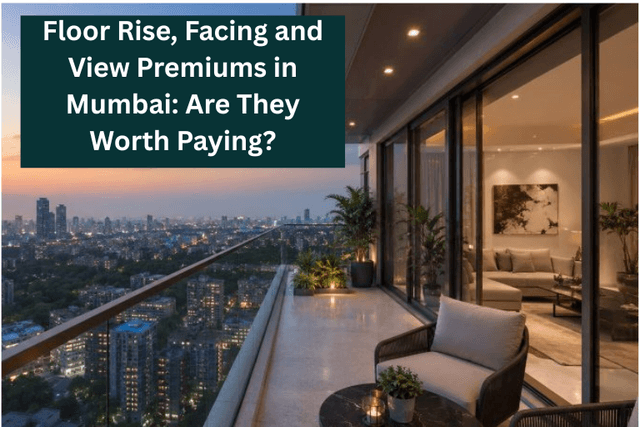
In Mumbai's property market, the floor number can directly influence the apartment's purchase price. Several developers charge additional amounts for apartments located on higher floors. This extra amount is commonly known as a floor-rise premium.
For example, two apartments with the same carpet area, layout and configuration may have different prices simply because one is located on the fifth floor and the other on the twentieth floor.
Before paying this additional amount, buyers should consider whether the benefits justify the higher cost. A higher-floor apartment may provide a better view, more privacy and less exposure to street-level activity. However, these advantages should be compared with the additional financial commitment.
Buyers should also calculate the impact of the higher purchase price on their home loan, monthly EMI and overall budget. Even a seemingly small increase in the apartment price can affect the total amount paid over several years.
It is advisable to ask the builder for a floor-wise price list and understand how the premium is calculated. Buyers should also check whether the quoted price includes parking, amenities, taxes and other charges or whether these are billed separately.
3. Consider Natural Light and Ventilation
Natural light and fresh air play an important role in making an apartment comfortable. The floor number can influence both, but it should not be the only factor considered.
In some residential projects, lower-floor apartments may receive less sunlight because of neighbouring buildings, podium structures, trees or other surrounding developments. Higher floors may enjoy better access to daylight because they are less likely to be blocked by nearby structures.
Ventilation also depends on the apartment's layout, window placement, building orientation and surrounding open spaces. A higher-floor apartment does not automatically guarantee better airflow.
During a site visit, buyers should check the direction in which the main windows and balconies face. They should also observe whether nearby towers block sunlight or restrict the view.
Mumbai's warm and humid climate makes ventilation particularly important. An apartment that receives good natural airflow can feel more comfortable during everyday living and may reduce dependence on artificial cooling.
4. Evaluate the View from Different Floors
A pleasant view can make a significant difference to the overall appeal of an apartment. In Mumbai, depending on the location, higher floors may offer views of the sea, greenery, open spaces, city skylines or surrounding neighbourhoods.
However, buyers should not assume that every higher-floor apartment offers an attractive view. Some towers may face neighbouring residential buildings, commercial structures or upcoming construction sites.
Before finalising a floor, visit the actual apartment or inspect the view from a similar floor in the same tower. Check whether the view is permanently open or could be blocked by future development.
Buyers should also remember that views can vary depending on the apartment's direction. A lower-floor home facing a landscaped garden may offer a more pleasant living environment than a higher-floor apartment overlooking another building.
The quality of the view, rather than the floor number alone, should guide the decision.
5. Check Noise Levels and Privacy
Noise is an important consideration for people purchasing homes in busy parts of Mumbai. Apartments located close to main roads, commercial areas, railway lines, construction zones or public spaces may experience higher levels of outside noise.
Higher floors can sometimes provide greater separation from traffic and street-level activity. This can make them attractive to people who prefer a quieter home environment.
However, noise does not always come from outside the building. In high-rise projects, sound can also travel through corridors, elevators, common areas and neighbouring apartments.
Lower-floor apartments located near the entrance, clubhouse, swimming pool, garden or children's play area may experience more movement throughout the day.
Buyers should check the apartment's distance from lifts, staircases, service areas and recreational facilities. They should also visit the project at different times to understand the surrounding noise levels.
For families that value privacy, a floor with fewer disturbances and a suitable apartment layout may be more important than choosing the highest available floor.
6. Consider Elevator Availability and Waiting Time
Elevator facilities are among the most important factors to examine when buying an apartment in a high-rise project. Residents living on higher floors depend on elevators for daily movement, making their number, capacity and maintenance arrangements important.
Before booking an apartment, ask the developer how many passenger elevators and service elevators are provided in each tower. Check whether the number of elevators is suitable for the total number of apartments.
A tower with several apartments and insufficient elevators may experience long waiting times, particularly during morning and evening peak hours.
Buyers should also ask whether separate service elevators are available for domestic staff, maintenance workers and shifting activities. This can help reduce pressure on passenger elevators.
Another important consideration is backup power. Check whether elevators are connected to a generator or another backup system during electricity interruptions.
For senior citizens, families with small children and people with mobility difficulties, elevator reliability should be a major part of the floor-selection decision.
7. Assess Safety and Emergency Arrangements
Safety should never be overlooked when choosing a floor in a high-rise residential project. While modern buildings are designed with several safety measures, buyers should understand how emergency arrangements work.
Check whether the building has clearly marked emergency staircases, fire alarms, firefighting equipment, emergency lighting and proper evacuation routes.
Ask the developer about fire safety approvals and the building's emergency response arrangements. Buyers should also understand how residents are expected to move during a fire or other emergency.
Higher floors may require more time to evacuate during certain emergencies, making properly maintained safety systems particularly important.
Check whether staircases are easily accessible and whether emergency exits are clearly identified. Also ask about regular maintenance and safety inspections.
The availability of trained building management staff and a clear emergency response plan can add to residents' confidence.
8. Understand the Impact of Mumbai's Weather
Mumbai experiences heavy monsoon rainfall, high humidity and strong winds during certain periods of the year. These weather conditions should be considered while selecting a floor.
Apartments on higher floors may experience stronger winds, particularly in towers located near the coastline or in open areas. While this can improve ventilation, it may also affect the use of balconies and open spaces during windy weather.
Lower floors may face different concerns, such as waterlogging around the building, dampness in nearby common areas or limited sunlight due to surrounding structures.
Buyers should check the project's drainage arrangements, waterproofing measures and overall construction quality. Pay attention to balcony design, window fittings and the quality of external walls.
If the project is located close to the sea, ask about the materials used for windows, railings and other exposed fittings. Salt in the coastal air can affect certain materials over time.
Understanding how the building is designed to handle local weather conditions can help buyers select a more suitable apartment.
9. Check the Distance from Amenities and Common Facilities
High-rise residential projects in Mumbai often offer amenities such as gyms, swimming pools, gardens, children's play areas, clubhouses and indoor sports facilities.
Although these facilities improve the overall living experience, their location within the project can affect the comfort of residents on different floors.
For example, apartments located directly above a clubhouse, swimming pool or activity area may experience noise during busy hours. Similarly, homes close to service rooms or mechanical equipment may experience unwanted disturbance.
Buyers should study the building layout and identify the location of important facilities before selecting an apartment.
Families with children may prefer apartments that provide convenient access to play areas and gardens. Older residents may find lower or middle floors more convenient because they reduce dependence on elevators for everyday activities.
The best floor should offer a suitable balance between access to amenities and privacy.
10. Consider the Needs of Your Family
The ideal floor can vary significantly depending on the people who will live in the apartment.
For families with senior citizens, lower and middle floors may be more practical because they offer easier access if elevators are temporarily unavailable.
Families with young children should consider balcony safety, window designs, access to play areas and the overall security of the building.
Working professionals who spend long hours outside the home may prefer higher floors for their privacy, views and reduced exposure to street-level activity.
People working from home may place greater importance on a quiet environment, natural light and limited disturbance from common areas.
Buyers planning to live in the apartment for several years should also consider how their requirements may change over time. A floor that feels convenient today should remain practical as family needs evolve.
11. Study the Tower Layout Before Booking
The floor number alone does not determine the quality of an apartment. Its position within the tower is equally important.
For example, two apartments on the same floor may have completely different advantages because of their direction, surrounding buildings, window placement and distance from elevators.
Ask the developer for the tower plan and floor layout. Identify the position of the apartment, neighbouring units, lift lobby, staircase and service areas.
Check whether the apartment is located near the building's mechanical rooms, generator areas or other facilities that could create noise.
It is also useful to understand how many apartments are located on each floor. A floor with fewer apartments may offer greater privacy and less movement in common corridors.
If possible, inspect the sample flat and compare its layout with the actual apartment being offered.
12. Check Future Construction Around the Project
One of the biggest challenges in Mumbai's real estate market is changing neighbourhood development. An apartment that currently offers an open view may face a new building or commercial structure in the future.
Before selecting a floor, study the surrounding plots and understand whether any vacant land is likely to be developed.
Check the development plans, nearby construction activity and information available about upcoming infrastructure or residential projects.
An apartment on a higher floor may offer a good view today, but that view could change if another tall building comes up nearby. Similarly, a lower-floor apartment may become darker if a neighbouring plot is developed.
Buyers should discuss these possibilities with the developer and independently verify important information wherever possible.
Future development can also influence traffic, noise, sunlight and the overall living environment, making it an important part of the floor-selection process.
13. Compare Resale and Rental Demand
Floor selection can also influence the property's future resale and rental potential. In Mumbai, apartments with attractive views, good ventilation and greater privacy may appeal to certain categories of tenants and buyers.
Higher-floor apartments can attract people who prefer open views and a quieter environment. However, some tenants and buyers may prefer lower or middle floors because of convenience and easier access.
The demand also depends on the project's location, apartment size, pricing, amenities and the quality of the surrounding neighbourhood.
For investors, it is important to compare the price difference between floors with the potential rental income. Paying a large premium for a higher floor may not always result in a proportionate increase in monthly rent.
Buyers should also study recent resale transactions in the project or nearby developments to understand whether higher floors command a meaningful price difference.
14. Make a Site Visit Before Making the Final Decision
A site visit is one of the most useful ways to understand whether a particular floor is suitable. Brochures, sample flats and digital views can provide an overview, but they may not reflect the actual surroundings of the apartment.
Visit the project during the daytime to assess sunlight and ventilation. If possible, visit again in the evening to understand traffic noise, lighting and activity around common areas.
Check the view from the actual floor or a similar apartment in the same tower. Observe the distance between neighbouring buildings and look for possible obstructions.
Pay attention to the lift lobby, corridors, staircases and common facilities. These areas form part of the everyday living experience and should not be ignored.
Buyers should also compare at least two or three available floors before making a booking decision. This makes it easier to understand whether the additional cost of a higher floor offers enough practical value.
Floor Selection Checklist for Mumbai Homebuyers
Before finalising an apartment in a high-rise residential project, keep the following points in mind:
- Compare lower, middle and higher floors.
- Check the floor-wise price difference.
- Evaluate natural light and ventilation.
- Inspect the view and possible future obstructions.
- Assess outside noise and privacy.
- Check elevator capacity and power backup.
- Review fire safety and emergency arrangements.
- Understand the building's monsoon protection measures.
- Check the apartment's distance from common facilities.
- Consider the requirements of all family members.
- Study the tower layout and neighbouring apartments.
- Compare resale and rental demand across different floors.
- Visit the project before making the final booking decision.
A careful comparison of these factors can help homebuyers choose a floor that offers a comfortable living experience without putting unnecessary pressure on their property budget.
- Buyers and tenants contact you directly
- Unlimited Property Listing
- Zero subscription/charges fee