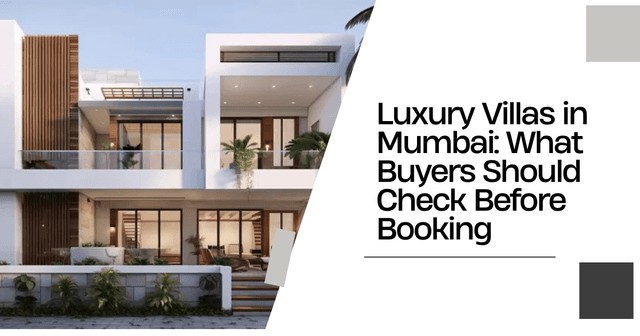
Row Houses vs Villas in Mumbai: Key Differences for Home Buyers
Mumbai's real estate market offers a wide range of housing options for buyers, from compact apartments in busy neighbourhoods to spacious independent homes in quieter locations. Among the premium housing choices, row houses and villas have gained attention from home buyers looking for more space, privacy and a comfortable lifestyle. Both property types offer an alternative to conventional apartment living, but they differ in design, ownership, maintenance, pricing and overall lifestyle.
For buyers planning to purchase a premium home in Mumbai, understanding the differences between row houses and villas is important. While both options may offer private entrances, multiple floors and outdoor spaces, the level of independence and living experience can vary significantly.
The right choice depends on the buyer's budget, family size, preferred location, maintenance expectations and long-term property goals. Before making a decision, it is useful to understand what each property type offers and how it fits into Mumbai's real estate market.
What Is a Row House?
A row house is a residential property that forms part of a series of houses built next to one another in a planned layout. These homes usually share one or two side walls with neighbouring properties, while each unit has its own entrance and separate living space.
Row houses are generally designed across two or more floors. They may include bedrooms, living areas, kitchens, balconies, terraces and small private gardens. Depending on the project, residents may also have access to shared facilities such as landscaped gardens, children's play areas, security services and parking spaces.
In Mumbai, row houses are commonly found in planned residential developments, gated communities and suburban neighbourhoods where developers have enough land to create low-rise housing projects.
One of the biggest attractions of a row house is that it provides more space and privacy than a typical apartment without requiring buyers to manage a completely independent property. Since some facilities and maintenance responsibilities may be shared, row houses can offer a practical middle ground between apartment living and independent villa ownership.
What Is a Villa?
A villa is generally an independent residential property built on its own plot of land. Unlike a row house, a villa usually does not share its side walls with neighbouring homes. It offers greater separation from surrounding properties and provides more control over the design and use of outdoor spaces.
Villas often feature spacious bedrooms, large living rooms, private gardens, terraces, parking areas and sometimes swimming pools or personal recreational spaces. Some luxury villas may also include home offices, entertainment rooms, private lifts and landscaped outdoor areas.
In Mumbai, villas are more commonly associated with premium residential locations, suburban areas and selected developments on the outskirts of the city. Buyers looking for a peaceful environment, larger living spaces and a more independent lifestyle often consider villas.
The main advantage of a villa is the greater sense of privacy and personal space. However, this independence can also mean higher purchase prices, maintenance expenses and responsibilities related to the property and its surrounding land.
Row Houses vs Villas in Mumbai: Major Differences
Although row houses and villas may appear similar at first, they offer different ownership and lifestyle experiences. Understanding these differences can help buyers identify which option suits their needs.
1. Property Design and Structure
The most noticeable difference between a row house and a villa is the way the property is designed.
Row houses are built in a connected arrangement, with multiple homes placed side by side. They generally follow a similar architectural style and layout. Since the houses are part of the same development, the overall appearance of the project is often uniform.
Villas, on the other hand, are designed as independent homes. They may have different layouts, architectural features and outdoor arrangements depending on the project and land availability.
For buyers who prefer a structured residential layout with a consistent neighbourhood design, row houses can be a suitable choice. Those who want a more independent property with greater separation from neighbouring homes may prefer villas.
2. Privacy and Personal Space
Privacy is an important consideration for families purchasing premium residential properties in Mumbai.
Row houses provide more privacy than many apartment developments because residents have their own entrances and do not share common walls with multiple neighbours. However, since the properties are connected, some level of interaction with neighbouring households is unavoidable.
Villas generally offer a higher degree of privacy because they are surrounded by their own land and do not share walls with adjacent homes. Residents can enjoy private gardens, outdoor seating areas and personal recreational spaces without being as closely connected to neighbouring properties.
For families who value quiet surroundings, private outdoor areas and greater separation from neighbours, villas may be more attractive.
3. Property Prices and Initial Investment
The purchase price is one of the most important factors when comparing row houses and villas in Mumbai.
Villas generally cost more because they offer independent land ownership or land-use rights, larger built-up areas and additional private spaces. Their prices can increase significantly depending on the location, plot size, construction quality and available facilities.
Row houses are often relatively more affordable than villas in comparable developments because they share a common structure and usually occupy smaller individual plots.
However, the actual price difference depends on the project. A premium row house in a well-connected Mumbai neighbourhood may cost more than a villa in a developing suburban location.
Buyers should compare the total property cost rather than focusing only on the advertised price. Additional expenses may include:
- Stamp duty and property registration charges.
- GST, wherever applicable.
- Parking charges, if separately charged.
- Legal and documentation expenses.
- Maintenance deposits and society charges.
- Interior work and furnishing costs.
- Utility connection and other applicable fees.
A detailed cost comparison can help buyers understand which property type fits their financial capacity.
4. Location and Availability in Mumbai
Location plays a major role in determining the availability and pricing of row houses and villas.
Mumbai has limited land availability in its established residential areas. As a result, independent homes and low-rise developments are not as common as apartment complexes in central locations.
Row houses are generally available in selected suburban and peripheral areas where developers can create planned residential layouts. Villas are also found in premium suburban pockets, gated developments and locations with larger land parcels.
Buyers exploring these property types may consider areas such as:
- Goregaon and Malad: Selected residential developments and premium housing options.
- Powai: Established residential infrastructure and access to business districts, although independent low-rise homes are limited.
- Thane: Planned residential communities and comparatively varied housing options.
- Panvel: Growing residential infrastructure and access to major transport links.
- Karjat: A choice for buyers seeking larger homes and quieter surroundings outside the main city.
- Alibaug: Premium independent homes and villas, particularly for buyers interested in second homes.
- The availability of specific property types varies by project and locality. Buyers should also consider travel time to workplaces, schools, hospitals and daily convenience stores before selecting a location.
5. Maintenance and Management Costs
Maintenance is another important difference between row houses and villas.
In a row house community, several responsibilities may be managed collectively through a housing society or residents' association. These can include security, common lighting, internal roads, landscaping and shared recreational facilities.
As a result, residents may find it easier to manage certain maintenance activities without arranging every service independently.
Villa owners may have greater responsibility for maintaining their individual properties. This can include garden maintenance, exterior painting, plumbing, electrical repairs, water systems and security arrangements.
Although some villa communities offer shared maintenance services, owners may still need to spend more on private property upkeep.
Before purchasing either property type, buyers should ask for a clear breakdown of monthly maintenance charges, repair responsibilities and additional community expenses.
6. Lifestyle and Amenities
Both row houses and villas can offer a comfortable lifestyle, but the experience may differ.
Row houses are often part of planned residential communities. These developments may provide:
- Clubhouses and community halls.
- Children's play areas.
- Walking paths and landscaped gardens.
- Fitness centres.
- Swimming pools.
- Gated security and visitor management.
- Shared parking facilities.
Such facilities can be particularly useful for families with children and senior citizens.
Villas may provide more opportunities for personalised living. Depending on the property, residents can enjoy private gardens, outdoor dining spaces, personal swimming pools and dedicated recreational areas.
However, not every villa comes with luxury facilities. Buyers should distinguish between amenities provided within the property and those available through a shared residential development.
7. Customisation and Renovation Flexibility
Buyers often want to personalise their homes according to their family's needs. This could involve changing room arrangements, adding storage areas, creating a home office or developing an outdoor seating space.
Row houses usually have certain design limitations because they are part of a connected structure. Changes to shared walls, external elevations and common areas may require approval from the relevant association and compliance with applicable building rules.
Villas may provide greater flexibility for interior changes and certain outdoor improvements. However, buyers cannot assume that every modification is permitted simply because the property is independent.
Construction rules, approved building plans, local authority permissions and project agreements must be checked before undertaking major changes.
For buyers who want greater freedom to customise their living spaces, villas may offer more opportunities, subject to the applicable rules.
8. Rental Income and Resale Potential
Investment potential is another factor worth considering when comparing row houses and villas in Mumbai.
Row houses may appeal to families looking for larger homes in organised residential communities. Their rental demand can depend on proximity to employment centres, schools, transport facilities and neighbourhood infrastructure.
Villas generally attract a smaller but more specific group of tenants. These may include senior executives, business owners, expatriate families and individuals looking for premium independent accommodation.
However, rental demand for villas can be limited in some locations because the monthly rent may be considerably higher than that of an apartment or row house.
Resale potential also depends on the property's location, construction quality, legal status, land value and overall market demand.
Villas with well-documented land ownership and desirable locations may benefit from long-term land value appreciation. Row houses in established communities can also attract buyers seeking independent-style homes with shared facilities.
Neither property type guarantees higher returns. Buyers interested in investment should study recent transactions, rental demand and the number of comparable properties available in the neighbourhood.
9. Security and Safety
Security is particularly important for families purchasing independent-style homes.
Row house developments often provide common security arrangements, such as gated entry, security guards, CCTV cameras and visitor registration systems. Since several homes are located within the same community, security arrangements can be managed collectively.
Villas within gated communities may offer similar facilities. However, standalone villas may require owners to arrange their own security systems, cameras, alarms and other safety measures.
Families should check the quality of security arrangements, emergency access, fire safety provisions and the availability of reliable support services before purchasing a property.
10. Legal Checks Before Buying a Row House or Villa in Mumbai
Legal verification is essential regardless of the property type. Buyers should not assume that an independent-looking home automatically has clear ownership rights.
Before booking a row house or villa, check the following documents and details:
- Title documents: Verify the legal ownership of the land and property.
- RERA registration: Check whether the project is registered with Maharashtra RERA, wherever registration is applicable.
- Approved building plans: Confirm that the construction follows the sanctioned plans.
- Commencement Certificate: Verify that the required permission to begin construction has been obtained.
- Occupancy Certificate: For completed properties, check whether the relevant Occupancy Certificate has been issued.
- Land-use permissions: Ensure that the land is legally approved for residential use.
Important Financial Factors to Consider Before Booking
Buying a row house or villa involves more than arranging the initial down payment. Buyers should assess the long-term financial responsibilities associated with the property.
Start by calculating the total purchase cost, including taxes, registration, interiors and other charges. If a home loan is required, compare interest rates, loan tenure, processing fees and monthly EMI commitments across lenders.
It is also important to maintain an emergency fund after purchasing the property. Independent homes can involve unexpected expenses, including plumbing repairs, waterproofing, electrical work and exterior maintenance.
Buyers should avoid using their entire savings for the down payment. Keeping sufficient funds for household expenses and emergencies can make property ownership more manageable.
For under-construction row houses and villas, check the construction schedule, payment milestones and possession commitments. Payments should be linked to the agreed construction stages, wherever applicable, and all important promises should be documented.
How to Compare Row Houses and Villas During a Property Visit
A property visit gives buyers an opportunity to assess details that may not be clear in brochures or online listings. Instead of focusing only on the appearance of the home, buyers should examine how the property will function in everyday life.
Check the room sizes, ventilation, natural lighting, staircase design and storage options. For row houses, pay attention to the distance between neighbouring homes and the level of privacy available in bedrooms and outdoor areas.
For villas, examine the condition of the boundary walls, garden space, drainage arrangements, water supply and outdoor maintenance requirements.
It is also useful to speak with existing residents, if possible. Their experiences can provide practical information about maintenance charges, security, water availability, construction quality and the overall management of the community.
Buyers should request a written list of all facilities included in the purchase price. Features displayed in sample homes or marketing brochures may not always be included in the actual sale agreement.
For home buyers exploring premium residential options in Mumbai, these practical checks can help make the comparison between row houses and villas more meaningful. The decision should be based not only on the size and appearance of the property but also on ownership rights, everyday convenience, long-term expenses and the lifestyle the family expects from its new home.
India’s real estate market continues to transform alongside infrastructure expansion, urban development, and changing homebuyer expectations. As new residential corridors and growth micro-markets emerge, opportunities are expanding beyond traditional city centres. Buyers and investors who track infrastructure projects, connectivity improvements, and planned urban growth are better positioned to identify high-potential locations and maximise long-term property value. Whether the objective is buying a home for self-use or building a diversified real estate investment portfolio, success depends on choosing the right location, entering at the right time, and making well-informed decisions. Evaluating neighbourhood development trends, selecting legally compliant and transparent projects, and aligning property purchases with long-term financial and lifestyle goals can significantly improve overall returns and ownership satisfaction. As the sector continues to mature, real estate remains one of the most stable long-term investment options. With careful planning, market awareness, and strategic decision-making, property investments made today can support wealth creation, financial security, and sustainable lifestyle growth in the years ahead.
- Verified Tenants/Buyers
- Unlimited Property Listing
- Zero subscription/charges fee