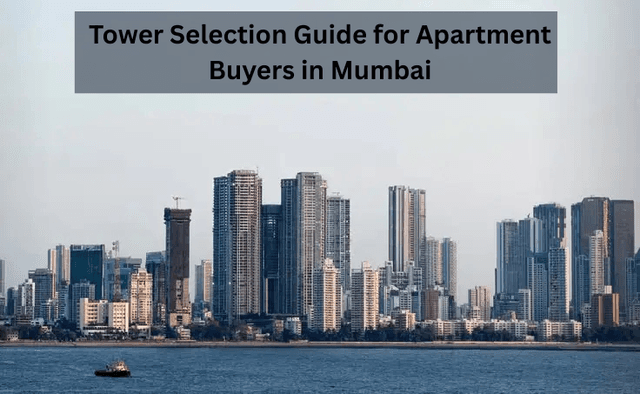
Buying an apartment in Mumbai involves several important decisions, from selecting the right location and builder to deciding on the apartment size, floor and budget. However, one factor that often receives less attention during the home-buying process is tower selection. In large residential projects, developers may offer multiple towers with different layouts, views, facilities, floor plans and price points. Although these towers may be part of the same project, the living experience they offer can be quite different.
For homebuyers, choosing the right tower is just as important as selecting the right apartment. A well-positioned tower can provide better natural light, ventilation, privacy and access to essential facilities. On the other hand, a poorly chosen tower may expose residents to construction noise, traffic movement, limited sunlight or an obstructed view.
Mumbai's residential market includes several large housing developments with multiple towers, making it important for buyers to understand the differences before making a booking decision. A careful tower selection can improve everyday comfort and may also influence the property's resale value in the future.
Why Tower Selection Matters When Buying an Apartment in Mumbai
In a large residential complex, every tower has its own position, surroundings and advantages. Even when two apartments have the same carpet area and similar interiors, their overall experience can vary depending on the tower in which they are located.
For example, a tower facing an internal garden may offer a quieter environment and pleasant views. Another tower in the same project may face a busy road, commercial development or neighbouring buildings. These differences can affect privacy, noise levels and the amount of natural light entering the apartment.
Tower selection also influences how easily residents can access common facilities such as the clubhouse, swimming pool, gym, children's play area, parking and entrance gates. Buyers should therefore look beyond the apartment's price and floor plan when comparing different towers.
Understanding these details before booking can help homebuyers make a more practical and informed decision.
1. Check the Tower's Location Within the Project
The first step in selecting the right tower is understanding its exact position within the residential project. Builders often provide a master layout showing the placement of different towers, open spaces, amenities, internal roads and entry points.
Buyers should carefully study this layout before choosing a particular tower.
A tower located towards the centre of the project may offer easier access to shared facilities. However, it could also experience more movement and activity, especially if it is close to the clubhouse or swimming pool.
Towers positioned towards the outer edges may provide better privacy in some projects, but their surroundings should be checked carefully. They may face external roads, neighbouring buildings or future construction sites.
Homebuyers should consider the following factors:
- Distance from the main entrance and exit gates.
- Proximity to internal roads and vehicle movement.
- Distance from recreational and common facilities.
- Availability of open spaces around the tower.
- Possibility of future buildings blocking the view.
- Distance from neighbouring residential or commercial developments.
The right choice depends on individual priorities. Families with children may prefer a tower closer to the play area, while buyers looking for a quieter environment may choose one away from busy common spaces.
2. Understand the Number of Apartments on Each Floor.
The number of apartments on each floor can have a direct impact on privacy, noise and convenience. Some residential towers have only two or four apartments per floor, while others may have six, eight or even more units.
A floor with fewer apartments may offer a quieter environment and less movement outside the main entrance. It can also reduce the number of residents sharing common spaces such as lifts and corridors.
However, buyers should not assume that fewer apartments automatically mean better quality. The corridor layout, apartment positioning, lift facilities and overall building design also matter.
Before selecting a tower, check:
- How many apartments are located on each floor?
- How many lifts serve the floor?
- Are the lifts separate for residents and service staff?
- Is there enough corridor space?
- Are apartment entrances positioned close to one another?
- Does the floor plan provide adequate privacy?
These details may appear small during a property visit, but they can influence daily convenience for many years.
3. Evaluate Lift Facilities and Waiting Time
Lift availability is an important factor in high-rise residential buildings, particularly in Mumbai, where vertical living is common due to limited land availability.
A tower may look attractive because of its design, views and apartment layouts, but inadequate lift facilities can create daily inconvenience.
For instance, a building with several apartments on each floor and only a limited number of lifts may experience long waiting times during busy hours. This can become especially challenging for senior citizens, families with young children and residents travelling to work during peak office hours.
Buyers should ask the builder about the number of passenger lifts, service lifts and emergency lifts available in the tower.
It is also useful to understand whether the lifts have separate access arrangements for residents, deliveries and maintenance staff.
For taller buildings, buyers should check whether the lift system is designed to handle the expected number of residents efficiently. The availability of backup power is another important point, as lift operations during power interruptions can affect convenience and safety.
4. Compare Natural Light and Ventilation
Natural light and fresh air play a major role in making an apartment comfortable. However, these factors depend not only on the apartment's layout but also on the tower's position and the distance between neighbouring buildings.
A tower surrounded by closely placed buildings may receive limited sunlight, particularly on lower floors. Similarly, apartments facing another tower at a short distance may have restricted airflow and reduced privacy.
Mumbai's humid climate makes proper ventilation particularly important. Homes with good air circulation can feel more comfortable and may reduce the need to depend constantly on artificial cooling.
During a site visit, buyers should check the direction of the apartment's windows and balconies. They should also understand whether
During a site visit, buyers should check the direction of the apartment's windows and balconies. They should also understand whether the surrounding towers are likely to block sunlight at different times of the day.
It is advisable to visit the property during different hours, wherever possible, to understand how sunlight enters the apartment.
5. Consider the View and Surrounding Environment
The view from an apartment can significantly influence its appeal. Depending on the project's location, buyers may have options such as garden-facing, city-facing, road-facing or open-view apartments.
A tower overlooking landscaped gardens or open spaces may offer a more pleasant residential experience. Apartments with open views can also feel more spacious and receive better natural light.
However, buyers should avoid paying a large premium simply because the builder describes a particular tower as offering a premium view.
The surrounding area should be examined carefully. An open plot visible from the balcony today may be developed into another building in the future. Similarly, a distant view of greenery may not remain unchanged if nearby construction is permitted.
Ask the builder about the ownership and development status of nearby land. Check the approved layout and available development information before paying extra for a particular view.
6. Check the Distance from Amenities and Common Areas
Large residential projects in Mumbai often include several facilities, such as swimming pools, gyms, landscaped gardens, sports areas, community halls and children's play zones.
While living close to these facilities may appear convenient, it is important to consider the possible disadvantages as well.
A tower located directly beside a clubhouse or swimming pool may experience higher footfall, noise and activity during weekends and evenings. Similarly, apartments near a children's play area may be exposed to regular noise.
On the other hand, towers located too far from essential facilities may require residents to walk longer distances.
Buyers should identify which facilities they are likely to use regularly and select a tower that offers a practical balance between accessibility and privacy.
It is also worth checking the distance between the tower and essential areas such as parking spaces, security gates, waste collection points and service entrances.
7. Assess Road Noise and Traffic Movement
Mumbai is a busy metropolitan city where traffic noise can affect residential comfort. Towers facing main roads, highways, railway lines or commercial streets may experience higher noise levels than those positioned inside the project.
Although higher floors may reduce some ground-level disturbance, they do not always eliminate traffic noise. Buildings located close to busy roads can also experience dust and pollution.
Before selecting a tower, buyers should check its distance from major roads and understand the direction in which the main bedrooms and balconies face.
If possible, visit the project during morning and evening peak hours. This can help identify traffic congestion, vehicle noise and other disturbances that may not be noticeable during a quiet afternoon visit.
8. Understand Fire Safety and Emergency Access
Safety should be a priority when choosing a tower, particularly in high-rise residential projects.
Buyers should ask about the fire safety arrangements provided in the building. These may include fire alarms, sprinklers, emergency staircases, fire-fighting equipment and designated evacuation routes.
It is equally important to understand whether the building has adequate access for emergency vehicles and whether the common areas are designed to support safe evacuation.
Check whether the required fire approvals and other applicable permissions have been obtained. Buyers should also review the building's approved plans and ask the developer about the arrangements for regular safety inspections and maintenance.
A well-designed residential tower should have clearly planned emergency facilities rather than treating safety as an additional feature.
9. Compare Tower-Wise Prices Before Booking
In large Mumbai residential projects, apartments with similar carpet areas may have different prices depending on their tower, floor, direction and view.
Developers may charge more for towers offering better views, greater privacy or proximity to selected facilities. While some price differences may be justified, buyers should understand exactly what they are paying for.
For example, a garden-facing apartment may carry a higher price than a road-facing unit. However, the premium should be compared with the actual advantages offered.
Ask the sales team for a tower-wise price comparison and check whether the quoted amount includes additional charges.
Consider the following costs:
- Basic apartment price.
- Floor rise charges.
- View or location premiums.
- Parking charges.
- Clubhouse or amenity charges.
- Maintenance deposits.
- Stamp duty and registration expenses.
- Other applicable taxes and charges.
Comparing the total cost rather than only the advertised base price can help buyers avoid unexpected expenses.
10. Study Future Construction Around the Tower
One of the most overlooked aspects of tower selection is the possibility of future development around the residential project.
A tower that currently enjoys an open view may face another building after a few years. Similarly, nearby vacant land could be developed into commercial offices, residential towers or other infrastructure.
This can affect sunlight, privacy, ventilation and the overall surroundings.
Buyers should examine the project's master plan and understand the permitted development around the property. It is also useful to check local development plans and available information about nearby infrastructure projects.
Do not depend entirely on verbal assurances that a particular view will remain open permanently. Ask for relevant documents and verify the information independently.
11. Check Parking and Entry-Exit Convenience
Parking arrangements can vary across towers within the same residential complex. Some buildings may have parking spaces closer to their entrance, while others may require residents to walk longer distances.
For families using private vehicles regularly, convenient parking access can make everyday life easier.
Buyers should ask where their allotted parking space will be located and whether it is covered, open, basement-based or provided in a separate parking structure.
The distance between the parking area and the tower entrance should also be considered, especially for senior citizens and families with children.
In addition, examine the internal road layout and entry-exit arrangements. Projects with multiple towers and large resident populations may experience congestion during office hours if traffic movement is not planned properly.
12. Verify Tower-Wise Approvals and Construction Details
Before finalising an apartment, buyers should verify that the selected tower is covered by the necessary approvals and project registrations.
In Maharashtra, buyers can use the Maharashtra Real Estate Regulatory Authority (MahaRERA) website to check project-related information.
The verification process should include:
- MahaRERA registration details.
- Approved building plans.
- Commencement Certificate (CC), as applicable.
- Fire safety approvals.
- Environmental permissions, where required.
- Possession timelines.
- Details of the developer and project phases.
- Occupancy Certificate, for completed buildings where applicable.
In large projects developed in phases, it is particularly important to confirm whether the specific tower has the necessary permissions and whether its construction schedule matches the builder's commitments.
Buyers should also confirm the exact tower number, apartment number, floor, carpet area and other details mentioned in the booking documents and agreement for sale.
13. Consider Resale and Rental Demand
Tower selection can also influence the future resale and rental appeal of an apartment in Mumbai. Buyers who may sell or rent their property later should consider which tower characteristics are likely to attract other homebuyers and tenants.
Apartments with good natural light, open views, convenient access to lifts and well-maintained surroundings may appeal to a wider range of residents.
Similarly, towers located near major project amenities may attract families, provided they do not experience excessive noise or disturbance.
The location of the residential project remains a major factor in determining demand. However, tower positioning can help one apartment stand out from other similar units within the same development.
Buyers planning to invest in property should compare the expected rental demand and resale appeal of different towers before paying a premium.
14. Visit the Actual Tower Before Making a Decision
Brochures, sample flats and digital presentations can provide useful information, but they cannot fully explain the actual living experience of a tower.
Whenever possible, buyers should visit the specific tower they intend to purchase. If construction is incomplete, they should inspect the project site and compare the proposed layout with the approved plans.
During the visit, pay attention to the building entrance, surrounding roads, available open spaces, neighbouring towers and the general environment.
For completed projects, spend time checking the common areas, lifts, corridors, parking facilities and maintenance standards. Speaking with existing residents can also provide valuable information about everyday issues that may not be highlighted by the sales team.
For under-construction properties, request a detailed explanation of the tower's location, floor plan and construction schedule. Do not select a tower solely on the basis of a model apartment or a sales presentation.
15. Match Tower Selection With Your Family's Requirements
The best tower is not necessarily the one with the highest price or the most attractive view. It is the one that matches the family's daily requirements, comfort expectations and financial plans.
For families with young children, easy access to play areas and landscaped spaces may be important. Senior citizens may prefer convenient lift access and shorter walking distances. Working professionals may prioritise quieter surroundings, parking convenience and easy access to the main entrance.
Buyers planning to live in the apartment for many years should also consider changing family needs. A tower that offers good privacy, ventilation and access to essential facilities may remain practical even as household requirements change.
Before booking, compare at least two or three towers within the same project. Evaluate their location, number of apartments per floor, lift facilities, views, sunlight, amenities, safety arrangements and total price.
A detailed tower comparison can help buyers identify the real advantages and disadvantages of each option instead of making a decision based only on the builder's recommendations.
- Buyers and tenants contact you directly
- Unlimited Property Listing
- Zero subscription/charges fee