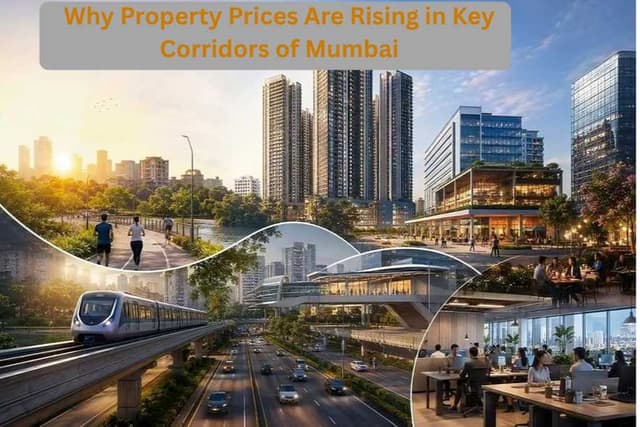
Bangalore has long been one of India's most attractive real estate markets, but the pace of price appreciation has become especially noticeable over the last few years. Homebuyers, investors, and developers are witnessing steady growth in property values across several important locations, particularly in areas connected by major roads, metro expansion, and employment hubs. While rising prices often raise concerns about affordability, they also reflect the city's continued economic growth and increasing demand for quality housing.
Several factors are working together to drive this trend. Better infrastructure, expanding business districts, strong job creation, improved connectivity, and limited supply in premium locations are pushing property prices upward. Whether it is a first-time buyer looking for an apartment or an investor seeking long-term returns, understanding why these key corridors are gaining value can help make informed decisions.
- Verified Tenants/Buyers
- Unlimited Property Listing
- Zero subscription/charges fee
Strong Demand Driven by the IT Industry
One of the biggest reasons behind rising property prices in Bangalore is the city's thriving technology sector. The city remains home to thousands of technology companies, startups, multinational corporations, and research centers. Every year, professionals from different parts of India relocate to Bangalore in search of better career opportunities.
This steady inflow of working professionals creates consistent demand for housing. Employees prefer living closer to their workplaces to reduce travel time and improve their quality of life. As a result, residential projects located near major IT corridors continue to attract strong buyer interest.
Areas surrounding large technology parks often witness higher demand because buyers view them as locations with stable rental income and good appreciation potential. Even during periods of market uncertainty, these neighborhoods generally maintain healthy demand due to continuous employment growth.
Infrastructure Development Is Boosting Property Values
Infrastructure plays a major role in determining property prices. As roads improve and public transport expands, previously overlooked areas become attractive residential destinations.
Several infrastructure projects across Bangalore have significantly improved connectivity between residential neighborhoods and commercial centers. Wider roads, flyovers, underpasses, elevated corridors, and better traffic management have reduced travel time in many parts of the city.
Metro expansion has become another major driver of real estate growth. Areas located close to metro stations are experiencing increased demand because residents can travel more comfortably without relying entirely on private vehicles. Easy access to public transportation adds convenience, making these locations more desirable for families and working professionals alike.=====
As connectivity improves, buyers are willing to pay higher prices for homes that offer shorter daily commutes.
Growth Along Major Residential Corridors
Several residential corridors have emerged as preferred destinations due to their strategic location and ongoing development.
Eastern Bangalore continues to benefit from its proximity to major IT hubs. New residential communities, commercial developments, shopping centers, healthcare facilities, and educational institutions have transformed the region into one of the city's fastest-growing markets.
Northern Bangalore has also witnessed remarkable growth. The presence of the international airport, business parks, and upcoming infrastructure projects has increased buyer confidence. Many investors believe this region still offers long-term appreciation potential.
Sarjapur Road, Whitefield, Electronic City, Bannerghatta Road, Kanakapura Road, and Yelahanka have all experienced rising property values due to improving infrastructure and expanding employment opportunities.
These corridors offer a combination of modern housing, improved connectivity, and access to daily conveniences, making them attractive for both end-users and investors.
Limited Supply in Prime Locations
Demand alone does not determine property prices. Supply plays an equally important role.
Many established neighborhoods in Bangalore have limited availability of land for new residential developments. As vacant land becomes scarce, developers find it difficult to launch large projects in premium locations.
When supply remains limited while buyer demand continues to increase, prices naturally move upward.
In some of the city's most desirable neighborhoods, redevelopment projects have replaced older buildings with modern apartments. However, the number of new units often remains lower than the growing demand, contributing to steady price appreciation.
As new office spaces, business parks, retail centers, hotels, and mixed-use developments emerge, nearby residential demand typically increases.
Employees prefer living close to workplaces to save time and transportation costs. Businesses also prefer locations with strong residential communities because they help attract and retain talent.
This balanced development strengthens local economies and supports long-term property appreciation.
Buyers Are Focusing on Future Growth Potential
Today's buyers are not just purchasing homes for immediate needs. Many carefully evaluate the future development plans of an area before making an investment.
Locations expected to benefit from upcoming metro lines, road expansion projects, commercial developments, or government infrastructure investments often attract early interest.
As these projects move closer to completion, property values generally rise because improved connectivity and better amenities increase the appeal of the neighborhood.
This forward-looking approach has made several emerging corridors in Bangalore highly competitive, with buyers willing to invest before prices climb further.
Developers Are Introducing Integrated Communities
Another factor supporting higher property prices is the growing popularity of integrated residential communities. These developments combine homes with parks, shopping spaces, schools, healthcare facilities, recreational amenities, and everyday services within a single planned neighborhood.
Such projects offer convenience, security, and a better overall living experience. Families appreciate the ability to access essential services without traveling long distances, while investors value the long-term appeal these communities hold in the resale and rental markets.
As integrated developments become more common across Bangalore's key corridors, they continue to attract strong buyer demand, reinforcing the upward trend in property prices.