Mumbai remains one of India’s most closely watched residential property markets. For investors, however, buying an apartment in the city is not simply about finding a property in a popular neighbourhood. The more important questions are how much money is required to enter the market, whether the apartment can attract tenants, and how easily it can be sold when the investor wants to exit.
Apartment investment in Mumbai can work as a combination of rental income and long-term property appreciation, but the outcome depends heavily on location, apartment size, purchase price, connectivity and the type of tenants a particular area attracts. A property that looks affordable at the time of purchase may not necessarily deliver strong rental demand, while a higher-priced apartment may have better resale potential if it is located close to employment centres, transport links and established social infrastructure.
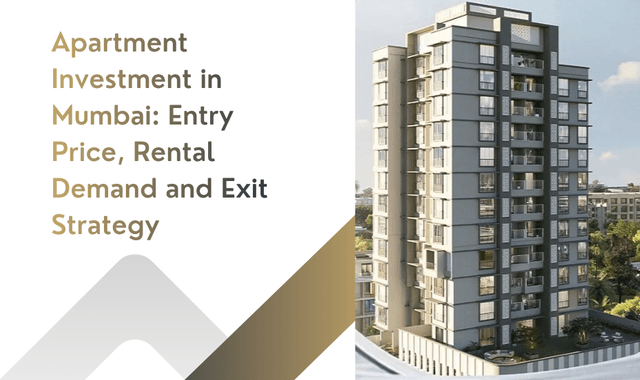
For buyers considering Mumbai property investment, understanding these three stages entry price, rental demand and exit strategy can make the decision more practical.
Entry Price: How Much Does It Cost to Enter Mumbai’s Apartment Market?
The first challenge for an apartment investor in Mumbai is the high cost of entry. Property prices vary substantially between neighbourhoods, and even within the same locality, prices can differ depending on the building, age of the property, floor, amenities and proximity to transport facilities.
Central and South Mumbai locations generally command high prices, making them difficult entry points for investors with limited budgets. Areas in the western and eastern suburbs can offer a wider range of apartment sizes and price points. Peripheral locations can provide relatively lower entry prices, although investors need to examine connectivity and future development carefully.
The purchase price is also only one part of the initial investment. Buyers need to account for registration charges, stamp duty, brokerage where applicable, interior work, maintenance deposits and other transaction-related expenses.
For example, an apartment purchased at a seemingly attractive price may require significant renovation before it can be rented. If the buyer spends heavily on interiors, appliances and repairs, the actual entry cost can become considerably higher than the advertised property price.
This is why investors should calculate the total acquisition cost rather than comparing properties only on their quoted per-square-foot rate.
Choosing the Right Apartment Size
Apartment size is closely connected to both the entry price and rental demand.
One-bedroom apartments can appeal to young professionals, single tenants and couples, while two-bedroom homes generally have a broader tenant base. Larger three-bedroom apartments may attract families and higher-income tenants, but the higher purchase price can make rental returns look different when compared with smaller homes.
For an investor, the question is not simply which apartment is cheaper. It is which property offers a sensible balance between purchase price and potential tenant demand.
A compact apartment in an area with strong employment and transport connectivity may remain easier to rent than a much larger home in a location where the tenant pool is smaller.
Rental Demand Is a Key Part of Mumbai Property Investment
Rental income can be an important reason for buying an apartment in Mumbai. The city has a large population of professionals, students, business owners and families who rent homes because of work, education and other personal requirements.
However, rental demand is not uniform across Mumbai.
Areas close to major business districts, transport networks, educational institutions, hospitals and commercial centres can attract steady interest from tenants. Locations connected to major roads and suburban railway stations can also have an advantage because daily commuting is an important consideration for Mumbai residents.
Metro connectivity has added another layer to the city's rental market. As new transport links improve access between residential and employment areas, some neighbourhoods can become more attractive to tenants who want to reduce commuting time.
For investors, this makes connectivity one of the most important factors to examine before purchasing an apartment.
Rental Yield: Look Beyond the Monthly Rent
A common mistake among new property investors is to focus only on monthly rent.
Suppose an apartment generates ₹40,000 a month in rent. That means annual rental income of ₹4.8 lakh before expenses. But the investor still needs to consider maintenance charges, property tax, repairs, vacancy periods, brokerage paid when finding a new tenant and other costs.
The actual return is therefore different from simply dividing annual rent by the purchase price.
Investors should also consider the possibility of periods when the apartment remains vacant between tenants. A property that produces high rent but frequently remains unoccupied may not perform as expected.
A realistic calculation should therefore include a vacancy allowance and regular ownership expenses.
Ready-to-Move or Under-Construction Apartment?
The choice between a ready-to-move apartment and an under-construction property can also affect an investment strategy.
A ready home can generally be rented out sooner, allowing the investor to begin earning rental income after completing the purchase and necessary preparations. It also allows the buyer to inspect the actual apartment, building and neighbourhood before making a decision.
An under-construction apartment may offer a different entry price or payment structure, but the investor has to wait for completion before rental income begins. Delays can further extend this waiting period.
For buyers whose main objective is rental income, the time between purchase and possession becomes an important part of the calculation.
Mumbai's property market is highly local. Two neighbourhoods that appear close on a map can have very different property markets.
Investors should look at the immediate surroundings of an apartment rather than relying only on the broader locality name.
A property located near a major transport connection, established shopping area and employment centre may have a stronger tenant base than one situated several kilometres away in a less accessible pocket.
At the same time, investors should avoid buying solely because a new infrastructure project has been announced. The expected benefit may take years to materialise, and project timelines can change.
The safer approach is to consider existing connectivity first and treat future infrastructure as an additional factor rather than the sole reason for buying.
Exit Strategy: Think About Selling Before Buying
The exit strategy is often overlooked by first-time property investors.
Many buyers focus heavily on the purchase price and expected rent but do not ask an equally important question: Who is likely to buy this apartment from me later?
A property with a broad potential buyer base can offer greater flexibility when the investor decides to sell.
Homes that appeal to both investors and end-users may have a wider resale market. Similarly, apartments in established neighbourhoods with good transport, schools, healthcare facilities and shopping options can attract different categories of buyers.
The resale market can also be influenced by apartment size. Extremely large or highly customised homes may have a smaller buyer pool, while practical apartment configurations can appeal to a wider range of households.
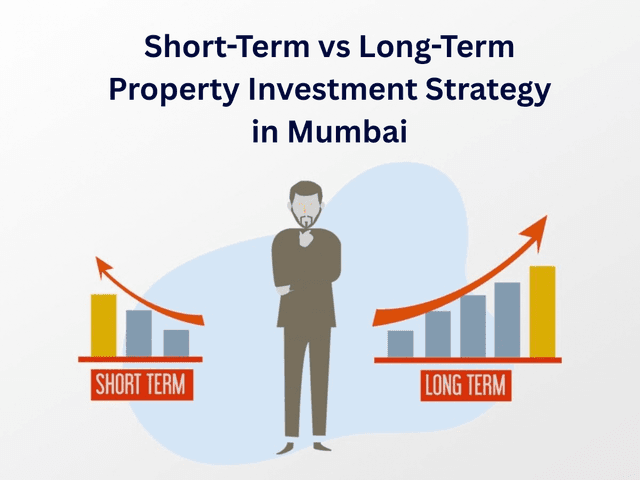
Holding Period Can Change the Investment Picture
Real estate is generally a long-term asset, and investors should be careful about assuming that property prices will rise quickly.
Short-term resale can involve several costs, including transaction expenses, brokerage and taxes applicable under prevailing rules. If the property is sold soon after purchase, these costs can reduce the amount left from any increase in the property's market value.
A longer holding period can give an investor more time to benefit from rental income and changes in the surrounding area. However, holding a property also means continuing to pay maintenance and other ownership expenses.
The ideal holding period therefore depends on the investor's financial situation, purpose and cash-flow requirements.
Calculate the Exit Price Realistically
Investors should avoid planning an exit based on an assumed annual price increase.
Instead, they can examine recent transactions and comparable properties in the same micro-market. The asking price of a neighbouring apartment is not necessarily the final price at which a property will sell.
Factors such as building age, condition, floor, parking, amenities and immediate surroundings can affect resale value.
An apartment that has been well maintained may also be easier to present to prospective buyers when the time comes to sell.
Keep an Eye on Building Age and Maintenance
The age of the building can become increasingly important as an apartment investment moves toward its exit stage.
Buyers may examine the condition of lifts, plumbing, electrical systems, parking areas, common spaces and other building facilities. High maintenance requirements can affect both rental demand and resale interest.
Before buying an older apartment, investors should understand the building's maintenance history and any major repair or redevelopment discussions.
Redevelopment can be an important factor in some Mumbai locations, but it should not be treated as guaranteed future value. Investors should verify the status of any redevelopment proposal through reliable documentation rather than relying solely on informal claims.
Documents Matter as Much as Location
A good location and attractive rental potential cannot compensate for unclear property documentation.
Before purchasing an apartment, buyers should verify ownership records, approvals, outstanding dues, society-related documentation and other applicable legal requirements. A qualified property lawyer can help examine the documents before the transaction is completed.
Buyers should also verify the project's registration and details through the relevant official property regulatory records where applicable.
Apartment Investment in Mumbai Requires a Three-Part Calculation
A practical way to assess an apartment investment is to divide the decision into three stages.
First is entry: Can the investor comfortably afford the total purchase cost, including transaction and initial improvement expenses?
Second is income: Is there a realistic tenant base, and what rent can the property reasonably generate after considering vacancy and ownership expenses?
Third is exit: If the investor decides to sell after several years, who will the likely buyer be, and what features will make the apartment attractive in the resale market?
This approach shifts the focus away from simply asking whether Mumbai property prices will rise. Instead, it encourages investors
India’s real estate market continues to transform alongside infrastructure expansion, urban development, and changing homebuyer expectations. As new residential corridors and growth micro-markets emerge, opportunities are expanding beyond traditional city centres. Buyers and investors who track infrastructure projects, connectivity improvements, and planned urban growth are better positioned to identify high-potential locations and maximise long-term property value. Whether the objective is buying a home for self-use or building a diversified real estate investment portfolio, success depends on choosing the right location, entering at the right time, and making well-informed decisions. Evaluating neighbourhood development trends, selecting legally compliant and transparent projects, and aligning property purchases with long-term financial and lifestyle goals can significantly improve overall returns and ownership satisfaction. As the sector continues to mature, real estate remains one of the most stable long-term investment options. With careful planning, market awareness, and strategic decision-making, property investments made today can support wealth creation, financial security, and sustainable lifestyle growth in the years ahead.
- Verified Tenants/Buyers
- Unlimited Property Listing
- Zero subscription/charges fee