Mumbai's real estate market offers property owners several opportunities to generate regular rental income. With the city attracting working professionals, students, business owners and families from across India, the demand for residential rental properties continues to come from different tenant groups. However, simply purchasing an apartment and putting it up for rent does not guarantee the best possible returns. Property owners must also decide how to present their homes to potential tenants.
One important decision is whether to rent out an apartment in furnished or unfurnished condition. Furnished properties generally offer greater convenience and may attract higher monthly rents, while unfurnished apartments require less initial spending and can appeal to tenants looking for long-term accommodation.
For property investors, the real question is not just which option generates higher rent but which one provides better returns after considering furnishing costs, maintenance expenses, vacancy periods and tenant preferences.
Understanding the differences between furnished and unfurnished rentals in Mumbai can help landlords choose the right approach for their investment goals.
1. Understanding the Difference Between Furnished and Unfurnished Rentals
Furnished and unfurnished rental properties serve different requirements in Mumbai's housing market.
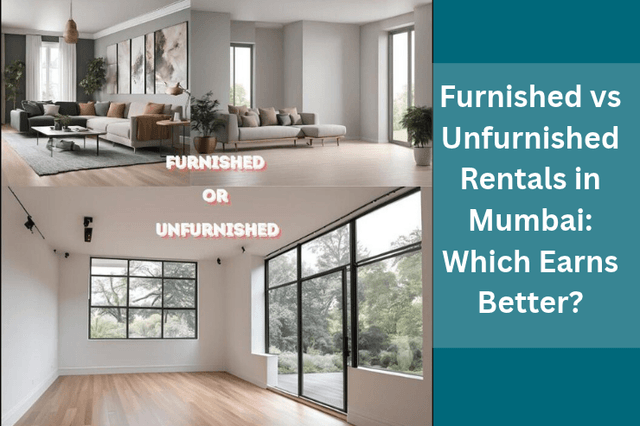
A furnished apartment is generally equipped with essential furniture, appliances and household facilities. Depending on the property and rental category, it may include beds, wardrobes, sofas, dining tables, refrigerators, washing machines, air conditioners, curtains and kitchen equipment.
Such apartments are suitable for tenants who want to move in without spending time and money arranging basic household necessities.
An unfurnished apartment usually comes with essential permanent fittings such as bathroom fixtures, electrical connections, kitchen platforms and basic lighting. Tenants are responsible for arranging their own furniture and appliances.
There is also a semi-furnished category that offers a combination of both. These apartments may include modular kitchen fittings, wardrobes, fans, lights, geysers and air conditioners but do not necessarily provide complete furniture.
Each category attracts a different type of tenant, making it important for landlords to understand the local rental market before making a decision.
2. Why Furnished Apartments Can Generate Higher Rental Income
Furnished apartments often command higher rents because they offer convenience and reduce the initial expenses tenants would otherwise incur when moving into a new home.
Mumbai has a large population of professionals who relocate to the city for employment. Many of them prefer furnished apartments because they may not plan to stay permanently or do not want to invest in furniture for a rented property.
For instance, an employee relocating to Mumbai for a two-year assignment may find it more practical to rent a fully furnished apartment than purchase beds, sofas, refrigerators and washing machines.
Locations such as Bandra, Powai, Andheri, Lower Parel and BKC attract professionals who may be willing to pay extra for ready-to-move-in accommodation.
Furnished properties can also appeal to corporate tenants and expatriates who prioritise comfort, convenience and proximity to workplaces.
For landlords, this creates an opportunity to charge a rental premium. However, the additional income should be compared with the money spent on furnishing and maintaining the apartment.
A property owner should also avoid unnecessary spending on luxury interiors unless there is sufficient demand for premium rental accommodation in the locality.
3. Why Unfurnished Apartments Attract Long-Term Tenants
Unfurnished apartments have a different advantage. They can attract tenants who already own furniture and prefer arranging their homes according to their personal requirements.
Families moving within Mumbai often carry their existing furniture and appliances. Renting an unfurnished apartment allows them to avoid paying extra for facilities they do not need.
Long-term professionals may also prefer unfurnished properties because they are more likely to remain in the same apartment for several years.
For landlords, longer tenancy periods can offer several benefits. Frequent tenant changes can involve advertising expenses, property inspections, brokerage charges and periods without rental income.
When a tenant stays for a longer period, these costs may be reduced. The landlord also has fewer furniture and appliance-related responsibilities.
Unfurnished apartments can therefore be a suitable option for property owners who prefer stable rental arrangements and relatively simple property management.
4. Which Mumbai Locations Are Better for Furnished Rentals?
Location plays a major role in deciding whether furnishing an apartment will increase its rental potential.
Different neighbourhoods attract different tenant groups, and their preferences influence the demand for furnished accommodation.
- Bandra and BKC: These areas attract business professionals, corporate employees and expatriates. Furnished apartments can appeal to tenants who want convenient accommodation close to offices and commercial establishments.
- Powai: Powai has a mix of corporate offices, educational institutions and established residential communities. Furnished apartments may attract working professionals and students, while families may prefer semi-furnished or unfurnished homes.
- Lower Parel: The presence of commercial offices, premium residential buildings and lifestyle facilities creates demand among professionals. Well-maintained furnished apartments can be attractive to tenants who want to reduce their daily travel time.
- Andheri East and West: These locations attract employees working in the corporate, entertainment and business sectors. Furnished homes can appeal to relocating professionals, while unfurnished apartments may attract families planning longer stays.
- Goregaon and Malad: These suburbs offer a combination of residential developments, commercial establishments and transport connectivity. Both furnished and unfurnished properties can find tenants depending on apartment size and rental budget.
- Thane: Thane attracts families and working professionals looking for relatively spacious accommodation. Semi-furnished and unfurnished apartments can be suitable for tenants planning to settle in the area for several years.
Landlords should compare rental listings in their immediate neighbourhood rather than assume that furnished apartments will always generate higher returns.
5. Furnishing Costs: How Much Should Property Owners Spend?
The biggest financial consideration when offering a furnished apartment is the initial furnishing investment.
Even a relatively compact apartment requires several essential items before it can be marketed as fully furnished.
For a 1 BHK apartment, landlords may need to arrange a bed, mattress, wardrobe, sofa, dining table, refrigerator, washing machine, air conditioner and basic kitchen equipment.
A 2 BHK apartment may require additional bedroom furniture, storage arrangements and appliances. Larger apartments may also
The total expense depends on the quality of the products, apartment size and the expectations of potential tenants.
Before spending money, landlords should prepare a furnishing budget covering:
- Bedroom furniture, including beds, mattresses and wardrobes.
- Living room furniture, including sofas and tables.
- Dining arrangements and kitchen equipment.
- Refrigerators and washing machines.
- Air conditioners and other essential appliances.
- Curtains, lighting and basic household accessories.
- Installation, repairs and future replacement costs.
Durability should be a priority when selecting furniture for rental properties. Expensive decorative pieces may increase the initial investment without necessarily improving rental income.
7. The Role of Semi-Furnished Apartments in Mumbai's Rental Market
Semi-furnished apartments provide an alternative for landlords who want to improve rental appeal without making a large furnishing investment.
These properties generally include essential fittings such as wardrobes, modular kitchen cabinets, fans, lights, geysers and air conditioners.
They offer tenants some basic convenience while allowing them to arrange their own furniture and personal belongings.
For example, a family moving into a 2 BHK apartment may already own beds, sofas and a refrigerator but appreciate having a fitted kitchen, wardrobes and air conditioners.
Similarly, working professionals may prefer a semi-furnished home because it reduces the number of household items they need to purchase.
For landlords, this arrangement can offer a balance between rental demand, furnishing expenses and maintenance responsibilities.
It may also make the property suitable for a wider tenant group rather than limiting it to people looking exclusively for fully furnished accommodation.
8. Maintenance Expenses Can Affect Overall Rental Returns
Furnished apartments generally require more maintenance because the landlord provides additional furniture, appliances and household equipment.
Air conditioners need servicing, washing machines may require repairs, and furniture can experience wear and tear with regular use.
When tenants move out, landlords may also need to inspect every item and replace damaged or unusable products before offering the apartment to another tenant.
These expenses can reduce the financial advantage of charging higher rent.
Unfurnished apartments usually involve fewer furniture-related responsibilities. However, landlords remain responsible for agreed property-related maintenance, including plumbing, electrical fittings, structural issues and essential fixtures.
A clear rental agreement can help avoid disagreements about who is responsible for routine repairs and damage.
Property owners should also maintain records of repair expenses to understand how much income the apartment generates after regular maintenance costs.
9. Rental Yield: Which Property Type Offers Better Returns?
Rental yield helps property investors understand how effectively their property generates income.
The basic formula is:
Rental Yield = (Annual Rental Income ÷ Property Purchase Price) × 100
Suppose a residential apartment costs ₹1 crore and generates an annual rental income of ₹4.8 lakh.
Its gross rental yield would be 4.8%.
However, investors comparing furnished and unfurnished apartments should account for furnishing expenses separately. The total investment includes the property purchase price and the additional money spent on furnishing.
For a more realistic comparison, landlords should also consider:
- Annual maintenance expenses.
- Furniture and appliance replacement costs.
- Property management charges.
- Periods without tenants.
- Brokerage and advertising expenses.
- Repairs and other rental-related costs.
Calculating net rental income provides a clearer picture of the actual returns generated by each option.
10. How Tenant Preferences Influence Rental Decisions
Tenant preferences are among the most important factors influencing the success of a rental investment.
Young professionals and people relocating from other cities may prioritise furnished apartments because they want to avoid purchasing household essentials.
Families may prefer unfurnished or semi-furnished properties because they already own furniture and want the freedom to arrange their living spaces.
Students may look for affordable furnished accommodation, particularly when they are staying in Mumbai for a limited period.
Corporate tenants may have different requirements depending on their accommodation budgets and employment arrangements.
Landlords should study the type of tenants living in their neighbourhood and understand what facilities they commonly look for.
Checking competing rental properties, speaking with local property brokers and reviewing recent tenant enquiries can provide useful information before investing in furniture.
11. Important Mistakes to Avoid While Choosing a Rental Format
Property owners sometimes make furnishing decisions based on assumptions rather than actual rental demand. This can increase expenses without delivering better returns.
Some common mistakes include:
- Overspending on Interiors: Installing expensive furniture and decorative features may not result in a proportionate increase in monthly rent.
- Ignoring Local Competition: A furnished apartment may struggle to attract tenants if similar properties in the neighbourhood are available at lower prices.
- Choosing Poor-Quality Furniture: Low-quality furniture may require frequent repairs and replacements, increasing long-term expenses.
- Overlooking Vacancy Periods: A higher rental rate is less useful if the apartment takes several months to find a suitable tenant.
- Not Preparing an Inventory: Landlords offering furnished homes should document all furniture and appliances to avoid disagreements during the move-out process.
- Ignoring Tenant Requirements: Providing facilities that tenants do not value can increase investment without improving the property's rental appeal.
12. What Should Mumbai Property Investors Consider Before Making a Decision?
Before deciding between furnished and unfurnished rentals, property owners should evaluate their financial goals and the expected tenant profile.
Investors seeking higher monthly rental income may consider furnished apartments in locations with strong demand from relocating professionals and corporate employees.
Those who prefer lower initial spending, fewer maintenance responsibilities and potentially longer tenancy periods may find unfurnished apartments more suitable.
Property owners should also consider how long they intend to hold the investment. A landlord planning to rent out an apartment for several years should calculate whether the furnishing investment can be recovered through additional rental income.
The condition and age of the apartment also matter. A newly constructed home may require less immediate repair work, while an older property may need electrical, plumbing or structural improvements before furniture is purchased.
It is equally important to understand the expectations of prospective tenants. A well-maintained apartment with functional fittings, good ventilation, reliable water supply and convenient connectivity can remain attractive even without expensive furniture.
The rental strategy should therefore be based on the property's location, tenant demand, expected holding period
India’s real estate market continues to transform alongside infrastructure expansion, urban development, and changing homebuyer expectations. As new residential corridors and growth micro-markets emerge, opportunities are expanding beyond traditional city centres. Buyers and investors who track infrastructure projects, connectivity improvements, and planned urban growth are better positioned to identify high-potential locations and maximise long-term property value. Whether the objective is buying a home for self-use or building a diversified real estate investment portfolio, success depends on choosing the right location, entering at the right time, and making well-informed decisions. Evaluating neighbourhood development trends, selecting legally compliant and transparent projects, and aligning property purchases with long-term financial and lifestyle goals can significantly improve overall returns and ownership satisfaction. As the sector continues to mature, real estate remains one of the most stable long-term investment options. With careful planning, market awareness, and strategic decision-making, property investments made today can support wealth creation, financial security, and sustainable lifestyle growth in the years ahead.
- Verified Tenants/Buyers
- Unlimited Property Listing
- Zero subscription/charges fee