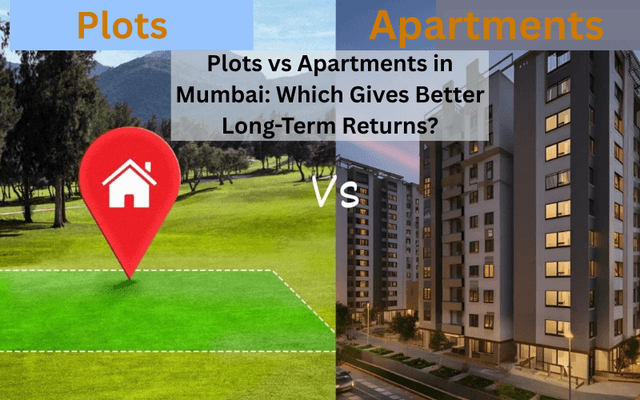
Mumbai's real estate market has long attracted investors looking for opportunities to build wealth through property ownership. From established residential neighbourhoods to rapidly developing locations across the Mumbai Metropolitan Region (MMR), the city offers several investment options. However, one question continues to create confusion among property buyers: should they invest in a residential plot or purchase an apartment for better long-term returns?
Both options have their own advantages and limitations. Plots are often considered attractive because land is a limited resource and can gain value as surrounding areas develop. Apartments, on the other hand, offer the possibility of regular rental income along with long-term price appreciation.
The right choice depends on the investor's budget, financial goals, preferred location and willingness to hold the property for several years. Understanding how plots and apartments perform in Mumbai's changing property market can help investors make a more informed decision.
Understanding the Difference Between Plot and Apartment Investment
Before comparing returns, it is important to understand how these two property investments work.
A plot investment involves purchasing a piece of land without an existing residential building. The investor can hold the land for future appreciation or develop it later, provided the property has the required permissions. Its value mainly depends on location, land availability, connectivity, development potential and surrounding demand.
An apartment investment involves purchasing a residential unit in a building or housing society. The property can be used for personal occupation or rented to tenants to generate monthly income. Its value depends on several factors, including location, construction quality, building age, available facilities and demand for housing.
In Mumbai, both property types can offer long-term financial benefits. However, their income potential, maintenance requirements and investment risks are considerably different.
Why Plot Investment Is Attractive in Mumbai
Land has always been an important part of Mumbai's real estate market because the availability of vacant land within established residential areas is limited. As the city continues to expand, investors are exploring land opportunities in developing parts of the wider metropolitan region.
One of the biggest advantages of investing in plots is the possibility of long-term appreciation. When new roads, railway connections, commercial developments and residential projects come up around a location, demand for nearby land may increase.
For instance, areas around Panvel, Karjat and selected parts of Navi Mumbai have attracted attention because of improving connectivity and development activity. However, investors should examine the actual location and legal status of a plot rather than relying entirely on future development announcements.
Another advantage is that land does not experience physical ageing like a residential building. An apartment may require renovation, structural repairs and improvements as it gets older, whereas the land itself remains available for future use.
Plots also offer flexibility. Depending on land-use permissions and local development rules, owners may eventually construct a house, develop a residential property or sell the land to another buyer.
However, plot investment is not completely risk-free. Land without clear ownership records, legal road access or residential development permissions can become difficult to use and sell. Investors must conduct thorough checks before making a purchase.
Why Apartments Remain a Popular Investment Choice
Apartments continue to attract property investors because they offer both residential utility and rental income.
Mumbai has a large population of working professionals, students, business owners and families who depend on rented accommodation. This creates demand for apartments in neighbourhoods close to workplaces, educational institutions, hospitals and transport facilities.
Locations such as Andheri, Powai, Goregaon, Thane, Mulund and Navi Mumbai attract residential interest because of their connectivity and established social infrastructure.
An apartment purchased in a suitable location can generate monthly rental income while its market value potentially increases over time. This makes it useful for investors who want their property to provide some financial benefit during the holding period.
Apartments also offer different investment budgets. Buyers can choose between compact 1 BHK homes, 2 BHK family apartments and larger premium residences depending on their financial capacity.
Another benefit is that apartments in established residential societies generally have access to facilities such as security, parking, lifts, water supply and common recreational spaces. These facilities can make the property more attractive to potential tenants and buyers.
However, apartments also involve regular expenses. Society maintenance, property taxes, repairs and renovation costs can reduce the actual income earned from renting the property.
Long-Term Price Appreciation: Which Offers Better Returns?
Price appreciation is one of the biggest reasons people invest in Mumbai real estate. However, the performance of plots and apartments depends heavily on the location and the price at which the property is purchased.
Plots may offer attractive appreciation when purchased in areas that are expected to experience genuine development. As surrounding residential projects, employment centres and transport facilities expand, demand for land may increase.
Apartments can appreciate as neighbourhoods become more developed and residential demand increases. Properties near operational metro stations, railway stations, commercial centres and essential services may attract stronger interest from buyers.
Recent market figures also show that residential demand and price growth vary across different parts of the MMR. According to Cushman & Wakefield's Q1 2026 Mumbai residential report, mid-segment capital values recorded annual increases of 10% in the eastern suburbs, 11% in the western suburbs and 12% in both Thane and Navi Mumbai. These figures reflect apartment market trends and should not be treated as direct comparisons with plot appreciation.
For investors, the important point is that neither plots nor apartments guarantee better appreciation. A well-located apartment purchased at a reasonable price may outperform an expensive plot in a poorly connected location.
Rental Income: Apartments Have a Clear Advantage
Rental income is one area where apartments have a major advantage over undeveloped plots.
An apartment can start generating income once it is ready for occupation and a suitable tenant is found. This income can help investors manage property expenses, home loan payments and other financial responsibilities.
In Mumbai, rental demand is influenced by employment opportunities, transport connectivity and access to everyday facilities. Apartments close to business districts and commercial areas may attract working professionals who prefer shorter travel times.
For example, residential properties in Powai, Andheri, Thane and Navi Mumbai may attract different categories of tenants depending on their size, rent and location.
Plots generally do not provide regular rental income. Investors must either hold the land until its market value increases or develop it for a permitted income-generating purpose.
However, rental income alone should not determine whether an apartment is a good investment. Buyers should calculate the annual rent against the total purchase cost and subtract maintenance expenses, property taxes, repairs and periods when the apartment remains vacant.
A property with higher monthly rent is not necessarily a better investment if its purchase price is disproportionately high.
Infrastructure Development and Its Impact on Property Values
Infrastructure development is an important factor influencing real estate investment decisions across Mumbai.
New roads, metro corridors, bridges, railway improvements and airport connectivity can make developing neighbourhoods more accessible. Better connectivity may encourage businesses to expand, create employment opportunities and increase demand for nearby housing and land.
Projects such as Atal Setu, the Mumbai Coastal Road, Metro Line 3 and Navi Mumbai International Airport have increased attention on several locations across the metropolitan region.
For plot investors, these developments may create opportunities to purchase land in areas where residential and commercial activity is expanding.
Apartment investors can also benefit when improved connectivity makes a neighbourhood more attractive to tenants and homebuyers.
However, investors should be careful about purchasing properties based only on proposed infrastructure projects. Development schedules can change, and the actual benefits may take several years to reach a particular location.
It is also important to check whether the property is genuinely close to the infrastructure facility or whether marketing material is exaggerating the distance and convenience.
Investment Costs: Plots vs Apartments
The total investment required for purchasing property goes beyond the advertised selling price. Buyers must consider several additional expenses before deciding between a plot and an apartment.
For plots, the major costs may include:
- Land purchase price.
- Stamp duty and registration charges.
- Legal verification and documentation expenses.
- Land surveys and boundary marking.
- Fencing and security arrangements.
- Site development and construction costs, if required later.
For apartments, additional expenses may include:
- Stamp duty and registration charges.
- Parking charges, wherever applicable.
- Society maintenance deposits.
- Monthly maintenance payments.
- Property taxes.
- Interior work and furnishing.
- Repairs and renovation expenses.
Buyers purchasing apartments under construction should also consider the payment schedule, applicable GST and the possibility of possession delays.
Plot buyers planning future construction must separately estimate building costs, approval charges and expenses related to utilities and site preparation.
Comparing the complete investment amount gives a more realistic understanding of the returns required to make a property financially worthwhile.
Legal Risks Involved in Plot and Apartment Investment
Legal verification is essential when purchasing any property in Mumbai. However, plots often require additional attention because land ownership and development permissions can be complicated.
Before purchasing a plot, investors should check:
1. Clear ownership: Verify the title deed and previous ownership records to ensure that the seller has the legal right to transfer the land.
2. Land-use permissions: Confirm whether the plot is classified for residential use and whether construction is permitted.
3. Encumbrance details: Check for outstanding loans, ownership disputes, court cases or other claims against the property.
4. Land boundaries: Match the survey records and actual measurements with the documents provided by the seller.
5. Development approvals: Verify the applicable permissions from the relevant planning authority.
6. Legal access: Ensure that the plot has proper access through a legally recognised road.
Apartment buyers should verify the developer's title, approved building plans, commencement certificate, MahaRERA registration and occupancy certificate, wherever applicable.
They should also examine the sale agreement carefully and understand the possession date, payment conditions and responsibilities of the developer.
Which Areas in Mumbai Should Plot and Apartment Investors Consider?
Location selection can make a significant difference to long-term property returns. Investors should focus on areas where actual residential demand, employment opportunities and infrastructure development support future growth.
Some locations worth studying include:
Panvel: Panvel has attracted investor attention because of its position within the Navi Mumbai region and improving connectivity. The surrounding area has witnessed residential development, while airport-related activity has increased interest in its long-term potential. Investors should compare individual locations carefully because prices and development conditions can vary considerably.
Navi Mumbai: Established nodes such as Kharghar, Nerul, Vashi and Belapur offer residential infrastructure, educational institutions, commercial facilities and transport connections. Apartments in these locations may appeal to both families and working professionals. Selected land opportunities may also interest long-term investors, subject to legal approvals.
Thane: Thane has developed into an important residential market with shopping centres, schools, hospitals and employment opportunities. Apartments may suit investors looking for established residential demand and rental prospects.
Mulund: Mulund offers access to established residential infrastructure and connectivity to other parts of Mumbai. Buyers interested in apartments can examine its established neighbourhoods and redevelopment projects.
Goregaon and Kandivali: These western suburban locations have attracted residential demand because of railway and metro connectivity, commercial activity and access to essential facilities. Apartment investors may find opportunities across different price segments.
Investors should not assume that every property in these areas will appreciate at the same rate. Local development plans, actual transaction prices, supply of new properties and neighbourhood conditions must be examined before making a purchase.
How to Calculate Long-Term Returns on Property Investment
Investors should calculate the overall return rather than focusing only on the difference between the purchase price and future selling price.
For example, consider two hypothetical investments:
A residential plot purchased for ₹50 lakh that increases in value to ₹90 lakh after ten years.
An apartment purchased for ₹50 lakh that increases in value to ₹80 lakh after ten years and generates rental income during the holding period.
Although the plot has a higher resale value in this example, the apartment may generate additional income through rent.
However, the apartment's maintenance expenses, taxes, vacancy periods and repair costs must also be considered. Similarly, the plot may involve fencing, legal and upkeep expenses.
A proper comparison should include:
- Initial purchase price and registration expenses.
- Total ownership and maintenance costs.
- Rental income received during the investment period.
- Loan interest, if the property was purchased through financing.
- Expected resale value.
- Applicable taxes and selling expenses.
Investors should also calculate annualised returns, which show how much the investment has grown on average each year. This makes it easier to compare two properties purchased at different prices and held for different periods.
Common Mistakes to Avoid When Investing in Plots and Apartments
Property investors sometimes make decisions based on attractive advertisements or promises of high returns. Such decisions can lead to financial losses if the actual market conditions do not match expectations.
Some common mistakes include:
- Buying only because prices are low: A low purchase price does not automatically make a property a good investment. Poor connectivity, unclear ownership or limited development potential can affect future demand.
- Ignoring legal documents: Missing ownership records and incomplete approvals can create serious problems during resale or construction.
- Depending entirely on future infrastructure: Announced projects may take years to become operational. Buyers should give greater importance to existing connectivity and confirmed development plans.
- Overlooking maintenance expenses: Apartment investors should consider society charges, repairs and renovation requirements before calculating rental returns.
- Not checking resale demand: Investors should study recent property transactions and understand who is likely to purchase the property in the future.
- Taking excessive loans: High monthly repayments can create financial pressure, particularly when rental income is uncertain or the property takes longer to appreciate.
How to Choose Between Plots and Apartments for Better Returns
The decision should ultimately depend on what an investor expects from the property.
Investors who have sufficient capital, a longer holding period and the ability to manage land-related legal checks may consider plots in locations with genuine development potential.
Those who want regular rental income and prefer an established residential investment may find apartments more suitable. A well-maintained apartment in a neighbourhood with strong tenant demand can provide both rental earnings and potential appreciation.
First-time investors should also consider the level of involvement required. Plot ownership may involve additional responsibilities related to land security, permissions and future development. Apartments generally offer a more structured ownership experience, particularly in established housing societies.
Another important factor is the ability to exit the investment. Before purchasing, investors should identify the likely buyer for the property, understand the local resale market and estimate how much time selling may take.
Mumbai's real estate market offers opportunities across both land and residential housing, but the quality of the investment depends on more than the property category. Buyers who carefully compare location, legal clarity, total costs and future demand are better positioned to identify properties with sustainable long-term potential.
India’s real estate market continues to transform alongside infrastructure expansion, urban development, and changing homebuyer expectations. As new residential corridors and growth micro-markets emerge, opportunities are expanding beyond traditional city centres. Buyers and investors who track infrastructure projects, connectivity improvements, and planned urban growth are better positioned to identify high-potential locations and maximise long-term property value. Whether the objective is buying a home for self-use or building a diversified real estate investment portfolio, success depends on choosing the right location, entering at the right time, and making well-informed decisions. Evaluating neighbourhood development trends, selecting legally compliant and transparent projects, and aligning property purchases with long-term financial and lifestyle goals can significantly improve overall returns and ownership satisfaction. As the sector continues to mature, real estate remains one of the most stable long-term investment options. With careful planning, market awareness, and strategic decision-making, property investments made today can support wealth creation, financial security, and sustainable lifestyle growth in the years ahead.
- Verified Tenants/Buyers
- Unlimited Property Listing
- Zero subscription/charges fee