Mumbai has long been one of India’s most closely watched real estate markets. From established areas in South Mumbai to rapidly developing suburbs and emerging locations around the Mumbai Metropolitan Region, property continues to attract buyers looking for rental income, capital growth or a combination of both.
However, buying a property is only one part of the investment decision. An equally important question is how long you plan to hold the property.
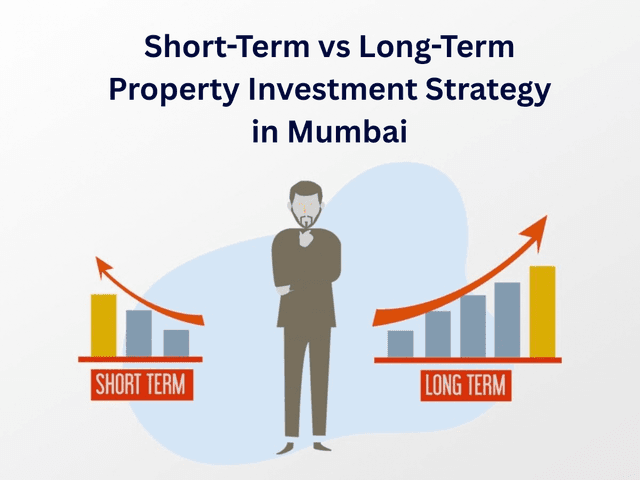
A short-term property investment strategy focuses on buying with the intention of selling within a relatively limited period, often after a few years. A long-term strategy involves holding the property for many years, allowing rental income, infrastructure development and changes in the surrounding area to potentially influence its value.
Both approaches have different requirements. The right choice depends on the investor’s budget, financial goals, risk tolerance, preferred property type and understanding of the Mumbai property market.
What Is a Short-Term Property Investment Strategy?
Short-term property investment generally means purchasing a property with the expectation of selling it after a relatively short holding period. The objective is usually to benefit from an increase in property prices rather than depending mainly on rental income.
In Mumbai, this approach can be linked to areas experiencing visible development. New transport links, commercial projects, redevelopment activity, improved roads and growing employment centres can influence buyer interest in a locality.
For example, an investor may purchase a property in an area where infrastructure development is underway and later sell it when demand and prices have increased. However, property prices do not automatically rise simply because a project has been announced. The actual progress of the project, local demand and broader economic conditions also matter.
Short-term investors therefore need to pay close attention to market developments and be prepared to sell when their financial objectives are met.
What Is a Long-Term Property Investment Strategy?
Long-term property investment involves holding a property for an extended period, often ten years or more. Instead of focusing mainly on a quick resale, the investor may look at the property's ability to generate rental income and potentially appreciate over time.
This strategy can be particularly relevant in Mumbai because property values and rental demand can vary considerably between neighbourhoods. A well-connected home near employment centres, educational institutions, transport facilities and everyday amenities may continue to attract tenants over a longer period.
Long-term investors also have more time to benefit from changes in the neighbourhood. A locality that looks relatively ordinary today may become more established as roads, public transport, offices, retail spaces and social infrastructure develop.
Location Matters More Than Ever for Short-Term Investors
For short-term property investment in Mumbai, location selection is particularly important. Investors generally need to identify areas where there is a reasonable possibility of increasing demand during their planned holding period.
Upcoming or improving infrastructure can be one factor to examine. New metro connectivity, road improvements, business districts, redevelopment projects and better public facilities can change how easily people can live and work in an area.
However, investors should distinguish between a project being announced and a project actually progressing. Delays can affect the expected timeline for price growth.
Another factor is the current price of the property. Buying at an already high price can limit the room for further growth, particularly if comparable properties in the area are not seeing strong demand.
Long-Term Investors Can Look Beyond Immediate Price Growth
Long-term investors have the advantage of time. They do not necessarily need the property to deliver a major price increase within two or three years.
Instead, they can examine broader factors such as connectivity, neighbourhood development, employment opportunities, tenant demand and the quality of the building.
For example, an apartment located close to major offices, schools, hospitals, retail areas and public transport may remain attractive to tenants even when the market is going through a slower phase.
This does not mean every property will appreciate consistently. Mumbai's property market can experience periods of strong growth as well as periods when transactions and price growth slow down. A longer investment horizon simply gives the investor more time to manage these cycles.
Rental Income Can Change the Investment Equation
Rental income is an important consideration for long-term property investors in Mumbai.
An investor purchasing an apartment for long-term ownership may rent it out rather than leaving it vacant. Regular rent can provide a cash flow while the property is being held.
However, investors should not look only at the advertised monthly rent. Maintenance charges, property taxes, repairs, vacancy periods, brokerage and other expenses can reduce the amount actually received.
For short-term investors, rental income may be less central to the strategy. If the plan is to sell within a few years, the investor may focus more heavily on the property's resale prospects.
Apartments in established residential locations can offer a relatively straightforward rental and resale market because there is a wider pool of potential buyers and tenants. Smaller and mid-sized homes may appeal to working professionals and families, depending on the location.
Luxury properties can have a different buyer base. They may require more capital and may take longer to sell during weaker market conditions.
Plots can also attract investors looking for long-term appreciation, particularly in developing areas. However, plot investments require careful checking of ownership documents, land use, approvals and accessibility.
Commercial property follows another pattern. Shops, offices and other commercial units may provide rental income, but their performance can depend heavily on the exact location, tenant demand and surrounding business activity.
Transaction Costs Need Attention
Buying and selling property involves costs beyond the purchase price. These can include stamp duty, registration charges, brokerage and other transaction-related expenses.
For a short-term investor, these costs become especially important because the property may be bought and sold within a relatively short period. The investment needs enough price growth to cover these expenses before the investor can achieve the desired gain.
Long-term investors can spread these costs over a much longer holding period. This is one reason why the investment horizon should be considered before purchasing a property.
Tax treatment can also affect the final financial outcome. Property investors should understand the applicable rules for capital gains, rental income and deductions and consult a qualified tax professional for advice based on their individual circumstances.
Financing Also Makes a Difference
Many Mumbai property purchases involve home loans. When borrowing is involved, the cost of financing becomes an important part of the investment calculation.
A short-term investor carrying a substantial loan may face greater pressure if the expected price increase does not happen within the planned period. Loan interest and other ownership costs continue even when the property is not generating sufficient income.
Long-term investors may also use loans, but their longer holding period can provide more time to manage repayments and potentially benefit from rental income.
Before investing, buyers should calculate their monthly obligations rather than assuming that future property appreciation will cover the costs.
How Market Cycles Affect Both Strategies
Mumbai's real estate market does not move in a straight line. Demand can be influenced by interest rates, employment conditions, consumer confidence, infrastructure development, housing supply and broader economic trends.
This creates different challenges for short- and long-term investors.
A short-term investor has less room to wait if the market enters a slow phase just when they want to sell. They may have to postpone the sale or accept a lower return than originally expected.
A long-term investor may be able to wait through a slower period. However, holding a property for many years does not guarantee a profit. Location, property quality, maintenance and changing buyer preferences remain important.
Choosing the Right Strategy Based on Your Goal
Investors should begin with their financial objective rather than starting with a particular locality.
Someone who expects to need the money in a few years may need a more liquid investment approach and should carefully consider whether property is suitable for that timeline. Property cannot always be sold quickly at the desired price.
Someone planning to build a property portfolio over a longer period may place greater importance on rental demand, neighbourhood quality and the property's ability to remain useful to future buyers and tenants.
The amount of money available also matters. A buyer with a limited budget may need to consider emerging areas, smaller apartments or properties farther from Mumbai's most expensive locations. A larger budget provides more options but does not eliminate the need for careful research.
What Mumbai Investors Should Check Before Buying
Regardless of the investment strategy, buyers should examine several basic factors before committing their money.
The property's legal documents should be properly checked. Buyers should also verify approvals, the developer's track record where applicable, possession status, maintenance costs and the actual condition of the building.
Location should be assessed beyond the immediate surroundings. Travel time to major employment areas, public transport, schools, hospitals, shopping facilities and other everyday services can influence both rental and resale demand.
Investors should also compare similar properties in the same locality. Looking at asking prices alone may not provide a complete picture. Understanding actual transaction trends, available inventory and rental levels can provide a more realistic view of the market.
Exit Planning Is Essential for Short-Term Investment
Short-term investors should think about the exit before entering the investment.
The key questions include: Who is likely to buy the property later? What could make the locality more attractive? How many competing properties could be available when the investor wants to sell? How much price growth is needed to cover buying and selling costs?
Having a clear exit plan can prevent an investor from simply waiting for an unspecified price increase.
For long-term investors, the exit plan can be more flexible. They may eventually sell the property, pass it to family members or continue earning rental income. This flexibility is one of the major differences between long-term ownership and short-term trading of property.
Short-Term and Long-Term Strategies Can Also Be Combined
Mumbai investors do not necessarily have to follow only one strategy.
An investor may hold one apartment for long-term rental income while purchasing another property with a shorter investment horizon. The approach can depend on the investor's available capital, financial commitments and investment objectives.
For people building a property portfolio, diversification across locations and property types may also be considered rather than putting all available funds into a single project.
The important point is to understand why each property is being purchased. A property intended for a three-year investment should be evaluated differently from one expected to remain in the portfolio for 15 years.
Emerging Mumbai Locations Require Extra Research
Developing locations can attract investors because property prices may be lower than in established neighbourhoods and infrastructure may be improving.
For short-term investors, the timing of development becomes particularly important. If infrastructure takes longer than expected, the investment timeline may also change.
For long-term investors, a developing location can be evaluated based on its broader potential to become a mature residential or commercial area. Yet investors should still examine current connectivity, existing demand and the availability of basic facilities rather than relying entirely on future development plans.
The Role of Professional Advice
Real estate transactions involve legal, financial and tax considerations that can vary from one property to another. Buyers should consider obtaining independent advice before making a major investment.
A property lawyer can help review legal documents, while a tax professional can explain the tax implications of buying, renting and eventually selling the property. A qualified real estate professional with knowledge of the specific Mumbai locality can also provide information about comparable properties and current market conditions.
The more important the investment, the more useful it can be to verify information from multiple sources rather than relying solely on a salesperson's claims.
For Mumbai property investors, the short-term versus long-term decision ultimately begins with the investment timeline. A strategy based on a quick resale requires close attention to entry price, local demand and potential exit conditions, while a long-term approach places greater emphasis on rental demand, location quality, property upkeep and the ability to hold the asset through different market conditions. These differences should be considered before choosing the property, locality and financing structure.
India’s real estate market continues to transform alongside infrastructure expansion, urban development, and changing homebuyer expectations. As new residential corridors and growth micro-markets emerge, opportunities are expanding beyond traditional city centres. Buyers and investors who track infrastructure projects, connectivity improvements, and planned urban growth are better positioned to identify high-potential locations and maximise long-term property value. Whether the objective is buying a home for self-use or building a diversified real estate investment portfolio, success depends on choosing the right location, entering at the right time, and making well-informed decisions. Evaluating neighbourhood development trends, selecting legally compliant and transparent projects, and aligning property purchases with long-term financial and lifestyle goals can significantly improve overall returns and ownership satisfaction. As the sector continues to mature, real estate remains one of the most stable long-term investment options. With careful planning, market awareness, and strategic decision-making, property investments made today can support wealth creation, financial security, and sustainable lifestyle growth in the years ahead.
- Verified Tenants/Buyers
- Unlimited Property Listing
- Zero subscription/charges fee