Buying a property in Mumbai is a major financial decision, whether it is a home for personal use or an investment for the future. While location, price, amenities and connectivity often influence a buyer's choice, checking the legal documents is equally important. A property may look attractive and fit within the budget, but incomplete paperwork, ownership disputes or unpaid loans can create serious problems later.
Three terms that property buyers frequently encounter during the purchase process are Khata, Title Deed and Encumbrance Certificate (EC). Each document serves a different purpose and provides information that can help buyers understand the property's legal position. Knowing what these documents mean, how they differ and what to verify before making a payment can help buyers make informed decisions.
Mumbai's property market includes apartments in cooperative housing societies, newly constructed flats, resale homes, independent houses, plots and redevelopment projects. The documents required may vary depending on the type of property, its age and its ownership structure. Buyers should therefore understand which records apply to their specific transaction rather than relying on a standard checklist alone.
What Is a Khata in Property Documents?
A Khata is generally a municipal or local authority record used to identify a property for property tax assessment and related administrative purposes. It usually contains details such as the property's location, identification number, size and the person recorded as responsible for paying property tax.
The term Khata is commonly associated with municipal records in Karnataka. In Mumbai, property buyers will more often encounter records such as the property tax assessment, municipal property account details, property card, city survey records and other documents maintained by the relevant authority.
This distinction is important because buyers should not assume that every Mumbai property will have a document called a Khata. The appropriate record depends on the property's location, nature and applicable municipal or land administration system.
For a flat in Mumbai, buyers may need to examine municipal tax records alongside the registered agreement for sale, society records, property card where applicable and other ownership documents. For a plot or land parcel, land records and city survey documents may be particularly important.
Why Are Property Tax and Municipal Records Important?
Municipal records help buyers check whether the property is recorded for assessment and whether property tax liabilities are outstanding. They may also provide useful details for matching the property against other documents.
However, a municipal tax record does not, by itself, establish legal ownership. A person's name appearing in a property tax record does not automatically prove that the person has a valid and transferable title to the property.
Before purchasing a flat or plot in Mumbai, buyers should:
- Check the property identification details and address against the sale documents.
- Review available property tax bills and payment receipts.
- Ask whether any outstanding property tax or municipal dues remain unpaid.
- Compare the recorded details with the registered agreement and other relevant land or building records.
- Clarify any differences in the owner's name, property number, area or address before proceeding.
If the property is part of a cooperative housing society, buyers should also review relevant society records. These may include share certificates, transfer records, maintenance dues and documents showing the seller's membership, where applicable.
What Is a Title Deed and Why Does It Matter?
A title deed refers to a legal document or set of documents that establishes or records a person's ownership rights in a property. In everyday property transactions, buyers often use the term to refer to the registered sale deed or other document through which ownership was acquired.
The title deed is one of the most important documents to examine before purchasing property in Mumbai. It helps establish how the seller acquired the property and whether the seller has the legal right to transfer it to another person.
For example, if a seller claims to own a two-bedroom apartment in Andheri, the buyer should not rely only on the seller's name appearing on a maintenance bill or electricity bill. The registered agreement for sale, conveyance deed or other relevant ownership documents must be examined to understand the seller's legal rights.
What Should Buyers Check in a Title Deed?
A careful review of the title deed can help identify discrepancies and possible ownership risks before the transaction moves forward.
1. Verify the owner's name
Check whether the seller's name matches the ownership documents and identification records. If the property has multiple owners, confirm that all necessary owners are participating in the transaction or have legally authorised representation.
2. Understand how the seller acquired the property
The seller may have purchased the property, inherited it, received it through a gift or acquired it through another legally recognised process. Each situation may require different supporting documents.
For inherited property, for instance, buyers may need to review the previous owner's documents, the will or succession-related records where applicable, and evidence showing who is legally entitled to transfer the property.
3. Review the property's description
The address, flat number, floor, building name, survey number or other identification details should match across the relevant records. For land, boundaries, plot measurements and survey details require particular attention.
Even a small mismatch should be clarified before signing the final agreement.
4. Check the chain of ownership
The chain of ownership refers to the sequence of transfers through which the property has passed from one owner to another. Buyers should review the relevant previous agreements, conveyance deeds, inheritance documents or other records to understand how the current seller obtained the property.
A lawyer can determine which historical documents are necessary to establish a satisfactory title, taking into account the property's age and transaction history.
5. Check for restrictions on transfer
Some properties may have restrictions arising from lease conditions, redevelopment arrangements, government allotments, court orders or other legal requirements. These restrictions may affect whether the property can be sold freely or whether additional permission is necessary.
Buyers should clarify these matters before paying a substantial booking amount or signing binding documents.
Why Is a Registered Sale Deed Important?
In a typical resale transaction, the registered sale deed or agreement for sale is central to the ownership record, depending on the nature and stage of the transaction. Registration creates an official record of the transaction, but registration alone should not be treated as a guarantee that the seller has an unquestionable title.
The buyer should examine the seller's ownership documents and the earlier transactions that establish the seller's rights. A registered document may still require further legal scrutiny if the underlying ownership history contains gaps, disputes or inconsistencies.
For an under-construction apartment, the buyer may enter into a registered agreement for sale with the developer rather than receive a final conveyance deed immediately. The documents should be checked according to the stage of construction and the legal structure of the project.
What Is an Encumbrance Certificate (EC)?
An Encumbrance Certificate is a record of certain registered transactions affecting a property during a specified period. Depending on the registration system and the information available, it may show transactions such as registered sales, mortgages and other registered interests.
Property buyers use an EC to help identify whether the property has a recorded financial or legal burden that could affect the proposed purchase.
For example, if an owner has mortgaged a property to a bank and the mortgage is recorded in the relevant registration records, the EC may contain information about that transaction. This can alert the buyer to the need for further checks before completing the purchase.
However, an EC is not a complete record of every possible claim or dispute involving a property. It generally reflects entries available in the relevant registration records for the period and property details searched.
Why Should Mumbai Property Buyers Check an EC?
Checking the EC can help buyers identify certain registered transactions and compare them with the seller's claims. It is particularly useful when reviewing a resale property or examining the transaction history of a land parcel.
Before relying on an EC, buyers should consider the following:
- Search period: Confirm that the certificate covers an appropriate period for the property's ownership history.
- Property identification: Check that the survey number, registration details, address or other identifying information corresponds to the property being purchased.
- Registered mortgages: Look for entries indicating a mortgage or other registered financial interest.
- Past transfers: Compare recorded sale transactions with the ownership documents supplied by the seller.
- Unexplained entries: Ask a property lawyer to investigate transactions that are unclear or inconsistent with the seller's explanation.
An EC showing no recorded encumbrances should not be interpreted as proof that the property is completely free from all liabilities. Unregistered claims, pending litigation, certain statutory dues and errors in the search details may not be apparent from the certificate.
How Can Buyers Obtain an Encumbrance Certificate?
The process depends on the property's location and the records maintained by the relevant registration authority. Buyers should identify the appropriate Sub-Registrar's Office and use the applicable Maharashtra registration services or official process to request the relevant search or certificate.
The application may require details such as the property's survey or registration information, the names of previous owners and the period for which the search is required. The precise requirements can vary by property type and record availability.
Buyers should not assume that an EC issued in another state follows the same procedure or format. For a Mumbai property, the search must be carried out through the appropriate Maharashtra registration system and checked against the property's actual records.
Essential Property Documents to Check Before Buying in Mumbai
Apart from the Khata-related records, title documents and EC, buyers should review additional documents according to the type of property and the stage of the transaction.
1. Property Card and Land Records
A property card or relevant city survey record can provide information about a land parcel, including recorded ownership details and property identification information, depending on the record concerned.
These documents are particularly relevant when buying land, an independent house or a property where the underlying land rights need to be examined. Buyers should compare the details with the title documents and investigate any mismatch in ownership names, survey numbers or boundaries.
For properties in areas governed by different land administration arrangements, the appropriate record may vary. A property lawyer can identify which land records are applicable to the specific location.
2. Registered Agreement for Sale
For an apartment, the registered agreement for sale usually sets out the transaction terms, the property being purchased, the agreed consideration and the rights and obligations of the buyer and seller.
In a resale transaction, the buyer should examine the seller's existing agreement and the relevant earlier documents. For a new apartment, the buyer should check the developer's agreement, the project's registration details and the applicable disclosures.
The property description, payment schedule, possession terms and details of additional charges should be carefully reviewed before signing.
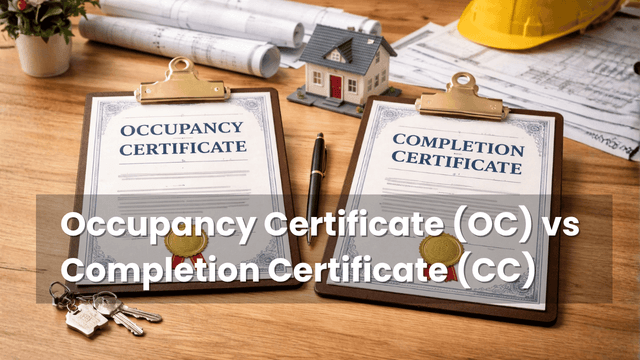
3. Occupancy Certificate and Completion Certificate
An Occupancy Certificate (OC) is an important document indicating that a building or relevant portion of it has been approved for occupation by the competent authority, subject to the applicable conditions.
A Completion Certificate (CC), where applicable, relates to the completion of construction in accordance with the relevant approved requirements. The precise documentation and terminology can depend on the approving authority and the project.
Buyers should check which certificates apply to the building and whether the documents cover the specific apartment or building section being purchased. This is particularly important for completed apartments and older buildings.
4. Society Share Certificate and No-Dues Information
When buying a resale flat in a cooperative housing society, buyers should review the society's share certificate and relevant membership or transfer records.
The share certificate is evidence of the seller's shareholding in the society, but it should not be treated as a substitute for examining the property's title documents.
Buyers should also ask for information about outstanding maintenance charges, special assessments, pending repair contributions and any other amounts payable to the society. Where appropriate, written confirmation should be obtained before completing the transaction.
5. Bank Loan and Mortgage Documents
If the seller has taken a home loan against the property, buyers should establish whether the loan has been fully repaid and whether the mortgage or charge has been released through the applicable process.
A bank's loan closure letter alone may not be sufficient in every case. Depending on the transaction, the buyer may need confirmation of the release of the mortgage, relevant original documents and updates to the applicable records.
If the property is still mortgaged, the sale should be structured carefully with the lender's involvement and appropriate legal safeguards.
Common Mistakes to Avoid When Verifying Property Documents
Property buyers sometimes rely too heavily on the documents provided by the seller or broker. A more careful approach can help prevent avoidable delays, financial losses and legal complications.
Relying only on the seller's name in tax records: Municipal records are useful, but they do not replace a proper title examination.
Checking only the latest ownership document: The latest agreement may not reveal gaps or disputes in earlier transfers. The relevant chain of ownership should be reviewed.
Ignoring the EC search period: A certificate covering only a short period may fail to show older transactions that are important to the ownership history.
Assuming a clean EC means there are no legal issues: An EC may not disclose every unregistered claim, pending case or statutory liability. Additional searches and legal checks may be necessary.
Overlooking property-specific restrictions: Leasehold land, inherited properties, redevelopment projects and certain government-allotted properties may have additional requirements.
Accepting photocopies without verification: Buyers should examine the available original documents or properly authenticated records and verify registrations through the relevant official channels wherever possible.
Making a large payment before legal checks: Avoid committing a substantial amount until the essential ownership and property records have been reviewed. The booking terms should also clearly explain the conditions for refund where applicable.
How a Property Lawyer Can Help With Document Verification
A property lawyer can examine the title history, identify missing documents and assess whether the seller has the legal right to transfer the property. The lawyer can also determine whether additional searches, permissions or confirmations are needed for the particular transaction.
For example, a property in an older Mumbai building may require a different set of checks from a newly constructed apartment in a registered real estate project. An inherited flat may require succession-related documents, while a property subject to a bank mortgage may need a carefully coordinated loan closure and release process.
Buyers should ask the lawyer to explain any concerns in simple language, including the possible financial consequences and the steps required to address them. If a document contains an inconsistency, it is better to resolve it before registration and payment rather than assume it can be corrected later.
Frequently Asked Questions About Property Documents in Mumbai
Is a Khata mandatory for buying a flat in Mumbai?
The term Khata is more commonly associated with property records in Karnataka. Mumbai buyers should identify the relevant municipal, land and ownership records applicable to their property rather than assume that a document specifically called a Khata is mandatory.
Is an Encumbrance Certificate compulsory for every property purchase?
The requirement can depend on the property and transaction. Even where an EC is not expressly required for a particular step, checking the relevant registration records can be a useful part of legal due diligence. Buyers should confirm the appropriate search requirements with their lawyer and the relevant registration authority.
Can I buy a property if the EC shows a mortgage?
A recorded mortgage does not necessarily make a sale impossible, but the outstanding loan and the lender's rights must be addressed. Buyers should not proceed on the assumption that the mortgage will disappear automatically after the sale. The transaction should include appropriate arrangements for repayment, release and verification of the relevant records.
Does a registered sale deed guarantee clear ownership?
Registration creates an official record of the transaction, but it does not automatically eliminate every possible defect in the seller's title. Buyers should examine the ownership history, applicable land records, registered transactions and any relevant legal restrictions.
What should I do if the names or property details do not match?
Do not ignore discrepancies in names, addresses, survey numbers, flat numbers or property measurements. Ask the seller for supporting documents and have the issue reviewed by a property lawyer. Depending on the cause, the discrepancy may require a correction, additional evidence or further legal investigation before the purchase can safely proceed.
India’s real estate market continues to transform alongside infrastructure expansion, urban development, and changing homebuyer expectations. As new residential corridors and growth micro-markets emerge, opportunities are expanding beyond traditional city centres. Buyers and investors who track infrastructure projects, connectivity improvements, and planned urban growth are better positioned to identify high-potential locations and maximise long-term property value. Whether the objective is buying a home for self-use or building a diversified real estate investment portfolio, success depends on choosing the right location, entering at the right time, and making well-informed decisions. Evaluating neighbourhood development trends, selecting legally compliant and transparent projects, and aligning property purchases with long-term financial and lifestyle goals can significantly improve overall returns and ownership satisfaction. As the sector continues to mature, real estate remains one of the most stable long-term investment options. With careful planning, market awareness, and strategic decision-making, property investments made today can support wealth creation, financial security, and sustainable lifestyle growth in the years ahead.
- Verified Tenants/Buyers
- Unlimited Property Listing
- Zero subscription/charges fee